A beautiful bathroom can feel both timeless and completely fresh—and modern farmhouse style makes that balance surprisingly easy. Modern Farmhouse Bathroom Ideas combine warm wood, classic details, clean lines, natural textures, and comfortable finishes to create spaces that feel welcoming without looking dated. Whether your bathroom is spacious or compact, the right combination of materials can make it feel more polished, practical, and inviting. From shiplap walls and warm wood vanities to patterned floors, vintage fixtures, soft textiles, and modern lighting, these ideas offer plenty of inspiration for your next update. In my experience, the most successful farmhouse bathrooms mix just a few traditional details with contemporary elements, creating a look that feels personal rather than overly themed.
Shiplap Accent Walls
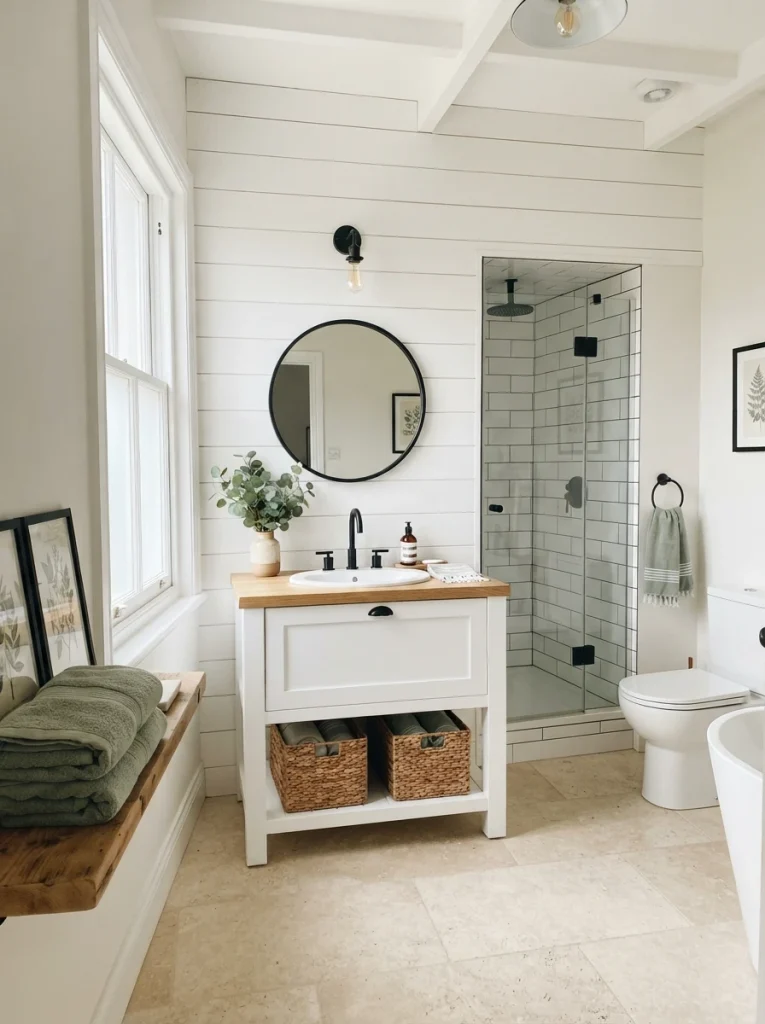
- White shiplap adds classic farmhouse character without overwhelming the bathroom.
- Horizontal boards can make a narrow room feel visually wider.
- Soft contrast keeps the walls bright and inviting.
- Matte finishes work well with natural wood and aged metals.
- Keep surrounding decor simple so the wall remains the focal point.
A shiplap accent wall can instantly give a bathroom that relaxed farmhouse character while keeping the overall design clean and modern. Choose wide horizontal boards in a soft white or warm ivory rather than a stark glossy finish. The linear texture adds dimension without requiring bold wallpaper or busy patterns. In my experience, shiplap works particularly well behind a vanity because it creates a natural focal wall while leaving the rest of the bathroom visually quiet. Pair it with simple cabinetry, natural wood, and matte-black fixtures for a balanced combination of rustic warmth and contemporary simplicity.
The key is to let the wall texture provide enough personality without covering every surface in farmhouse details. Keep nearby accessories minimal and choose materials that complement the shiplap, such as woven baskets, pale stone, or aged wood. If the bathroom is narrow, horizontal boards can visually emphasize its width, helping the room feel more balanced. Make sure the chosen wall material and finish are appropriate for bathroom humidity and follow proper installation practices. Add soft greenery or one ceramic vessel for warmth. The finished space feels fresh, practical, and timeless without becoming overly rustic.
Warm Wood Vanity
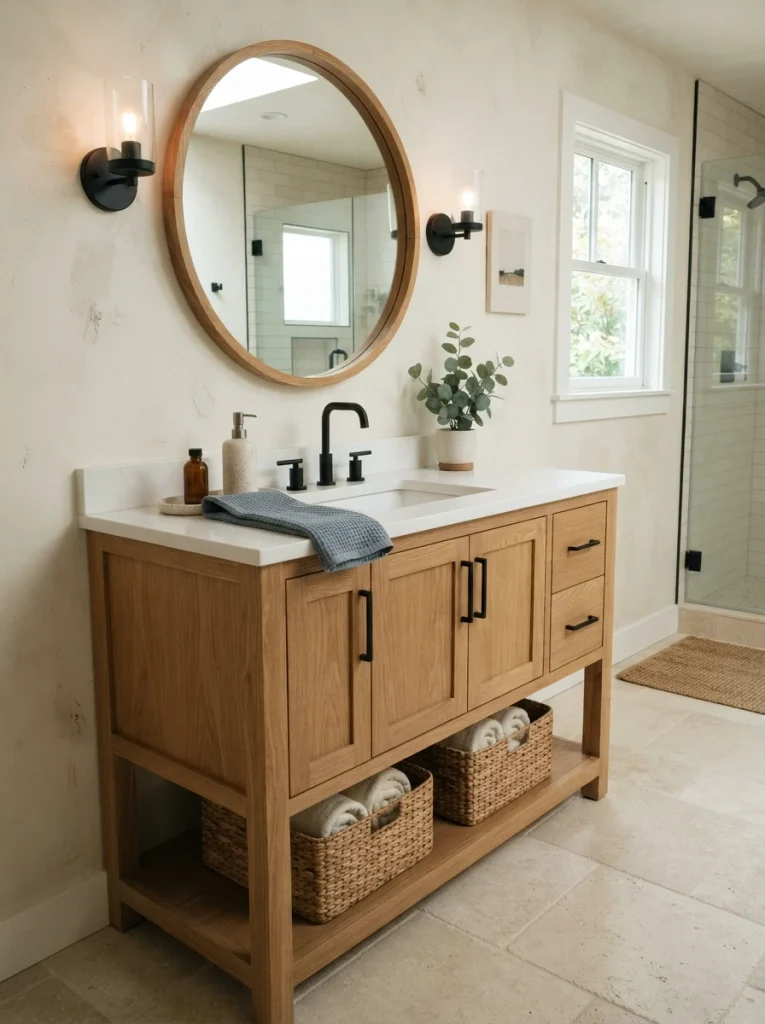
- Natural wood brings warmth into a mostly white bathroom.
- A simple vanity design keeps the room feeling modern.
- Visible grain adds organic texture without extra decoration.
- Black or brass hardware creates subtle contrast.
- Open shelving can provide practical towel storage.
A warm wood vanity can completely change the atmosphere of a farmhouse bathroom by introducing natural character against lighter walls and surfaces. Choose oak, walnut, or another moisture-appropriate wood finish with visible grain and a relatively simple profile. Pair it with a white quartz or stone countertop for a clean contrast. I’ve noticed that natural wood works especially well in bathrooms because it softens hard surfaces like tile and porcelain, making the room feel more welcoming. Add understated hardware in matte black or aged brass to connect the rustic material with a modern farmhouse aesthetic.
Keep the vanity design streamlined rather than heavily distressed or overly decorative. Flat-front or lightly framed doors can provide farmhouse influence without making the bathroom look dated. Use drawers for everyday toiletries and reserve open shelving for neatly folded towels or one attractive basket. A simple mirror above the vanity can maintain the clean visual balance, while a small plant introduces another natural element. Choose lighting that illuminates the face evenly without creating harsh shadows. When the wood grain, stone countertop, and neutral walls work together, the vanity becomes a warm focal point that feels both practical and refined.
Black Framed Shower
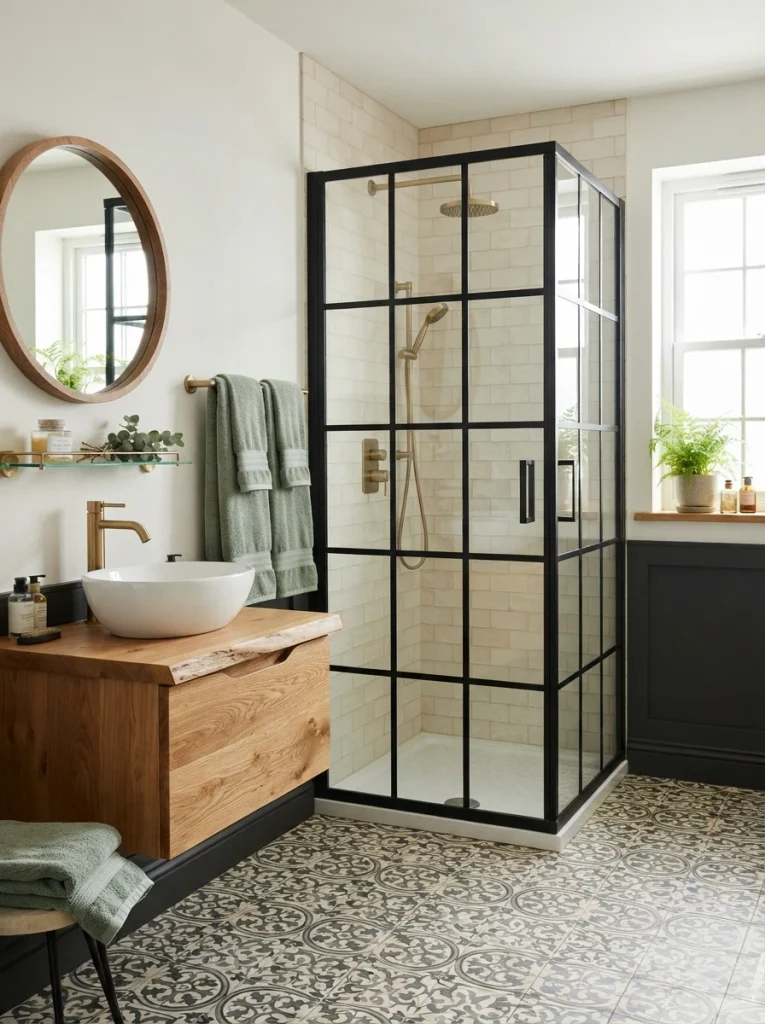
- Black framing creates crisp contrast against pale tile.
- Glass keeps the shower visually open.
- Simple grid patterns add farmhouse character.
- Matte finishes coordinate easily with other fixtures.
- Light walls prevent the dark frame from feeling heavy.
A black-framed shower can give a farmhouse bathroom an instantly polished focal point while keeping the space feeling open. The dark metal grid creates architectural definition against light tile, making the shower area visually interesting without adding complicated decoration. Choose clear glass so the enclosure does not visually divide the room, then pair it with creamy subway tile or lightly textured stone. In my experience, black framing works particularly well when repeated through small details such as cabinet pulls, mirrors, or lighting. This creates consistency and gives the bathroom a modern edge without losing its relaxed farmhouse character.
Keep the shower surroundings relatively light so the dark framing feels intentional rather than overpowering. Cream, white, or pale beige tiles can reflect natural light and balance the stronger lines of the enclosure. Choose a simple tile pattern if the frame already has a grid design, allowing the architecture to remain the focal point. Add one woven basket or soft sage towel for warmth without cluttering the area. Make sure the selected shower materials are suitable for regular moisture exposure and installed correctly. The finished space feels crisp, welcoming, and thoughtfully balanced between rustic farmhouse charm and contemporary bathroom design.
Vintage Brass Fixtures
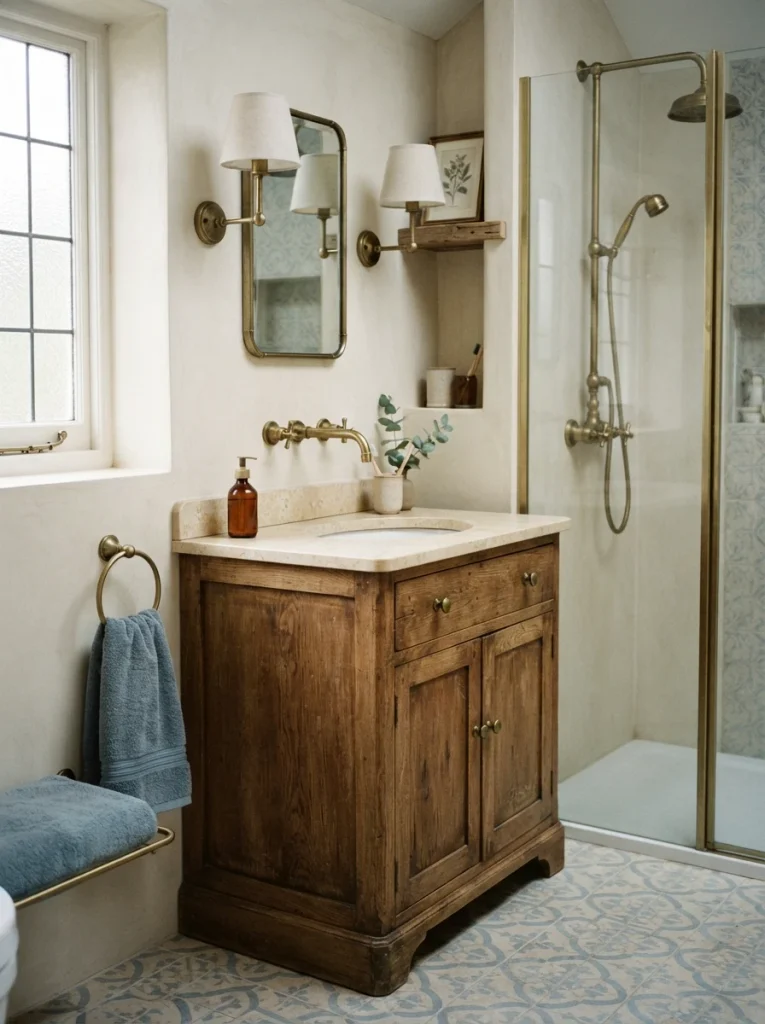
- Aged brass adds warmth without making the bathroom feel overly rustic.
- Vintage-inspired shapes bring subtle farmhouse character.
- Warm metal works beautifully with white and cream surfaces.
- Matching hardware creates a more cohesive finish.
- Brushed or unlacquered textures hide everyday water marks better than highly polished finishes.
Vintage brass fixtures can bring a warmer, more collected feeling to a modern farmhouse bathroom without requiring major changes. Choose an aged or brushed finish for the faucet, cabinet pulls, towel hardware, and lighting so the metal develops a cohesive presence throughout the room. Soft brass works especially well against white tile, cream plaster, and natural wood because it adds gentle contrast without looking harsh. In my experience, this finish is most effective when used consistently in a few important places rather than scattered across every accessory. The result feels welcoming, timeless, and comfortably lived-in.
Balance the warm metal with simple shapes so the bathroom still feels contemporary. A traditional bridge faucet can provide farmhouse character, while a clean-lined brass mirror or wall sconce keeps the overall look updated. Avoid mixing too many competing metallic finishes unless there is a clear reason for doing so. Pair the fixtures with pale stone, warm oak, and soft textiles to create a connected palette. Good bathroom lighting will also help the brass appear richer and more dimensional. With thoughtful placement, vintage-inspired hardware can add personality and craftsmanship while keeping the room practical and visually uncluttered.
Freestanding Soaking Tub
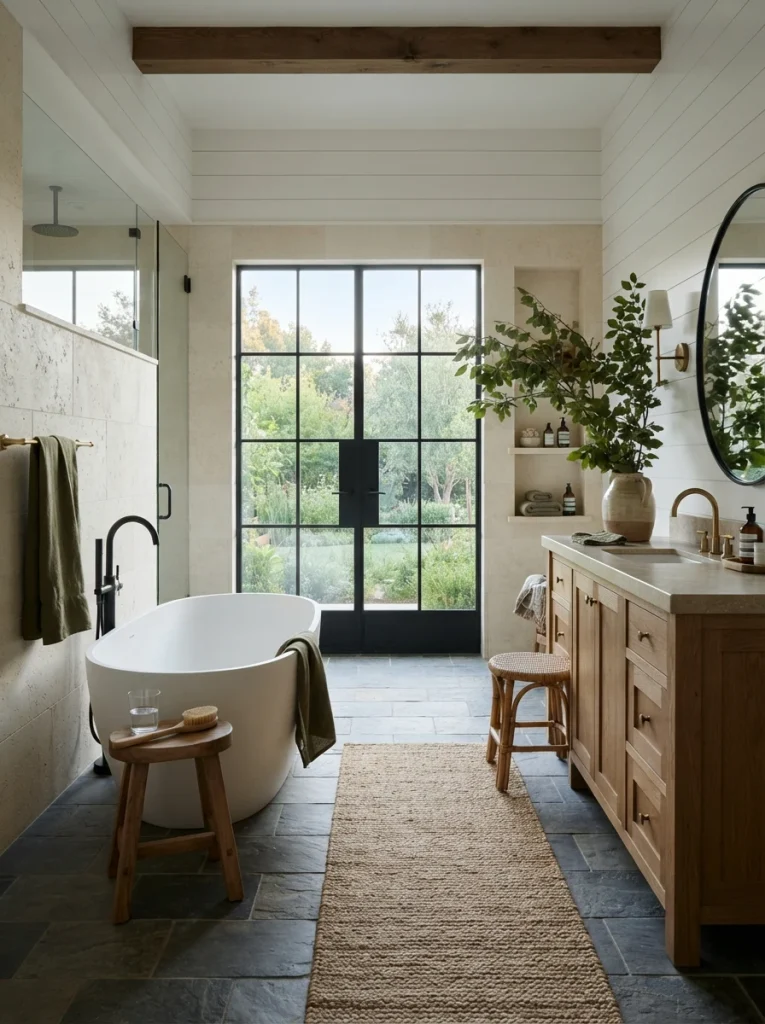
- A freestanding tub creates an immediate focal point.
- Simple curves soften the stronger lines of farmhouse materials.
- White porcelain keeps the room feeling fresh and spacious.
- Natural wood accents prevent the tub from looking too stark.
- A nearby stool provides practical space for towels or bath items.
A freestanding soaking tub can become the centerpiece of a farmhouse bathroom while creating a calm, spa-like atmosphere. Choose a simple white tub with a gently curved silhouette and place it where there is enough open space to appreciate its shape. Natural oak, woven baskets, and soft linen towels can warm the surrounding area without competing with the porcelain. I’ve noticed that freestanding tubs look especially effective when the rest of the bathroom stays relatively restrained. Their sculptural shape provides enough visual interest on its own, allowing the room to feel luxurious without relying on excessive decoration.
Think about the tub’s relationship with windows, lighting, and surrounding circulation before deciding where it belongs. A position near a large window can provide beautiful daylight while making the bathing area feel connected to the outdoors. Leave enough clearance around the tub for comfortable cleaning and movement. A small wooden stool can hold folded towels or bath essentials without introducing bulky storage. Keep the wall treatment simple, perhaps using plaster or understated tile, so the tub remains the focal point. The finished bathroom feels spacious, peaceful, and sophisticated while maintaining the relaxed character associated with modern farmhouse interiors.
Patterned Floor Tile
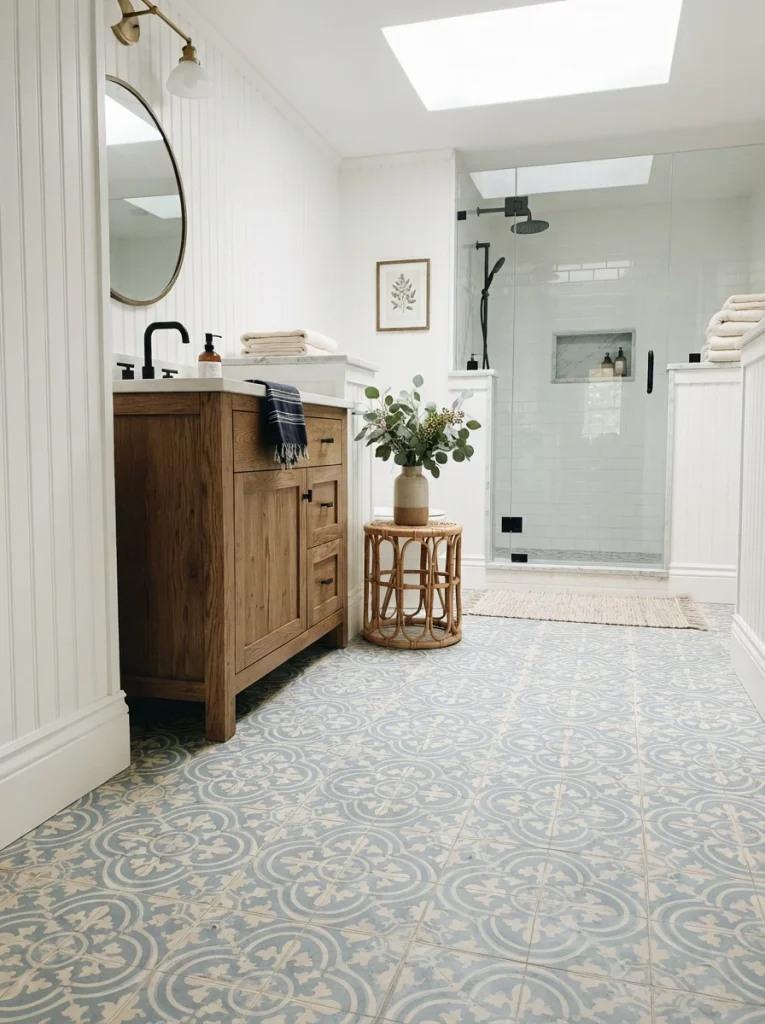
- Patterned flooring adds personality without covering the walls.
- Neutral patterns keep the farmhouse look sophisticated.
- Cement-look tiles provide practical visual texture.
- A darker floor can ground an otherwise pale bathroom.
- Repeating shapes help connect different design elements.
A patterned floor can give a farmhouse bathroom plenty of personality while keeping the walls and larger surfaces calm. Choose geometric, floral, or encaustic-inspired tiles in two or three coordinated shades rather than a highly colorful pattern. Soft blue, cream, charcoal, or muted clay can work beautifully with white cabinetry and natural wood. In my experience, using the pattern primarily on the floor creates character without making the room feel visually busy. It also gives a practical bathroom surface a decorative role, allowing the flooring to become an important part of the overall design.
Keep the rest of the room relatively simple so the floor has enough visual breathing room. A plain white vanity, understated shower tile, and minimal accessories will help the pattern remain intentional rather than overwhelming. Consider repeating one floor color in towels, ceramics, or a small accent to create cohesion. Choose bathroom-rated flooring with appropriate slip resistance and installation for wet areas. If the bathroom is small, a medium-scale pattern can add interest without making the floor look fragmented. The result feels fresh, grounded, and distinctive while maintaining comfortable farmhouse character.
Apron Front Sink
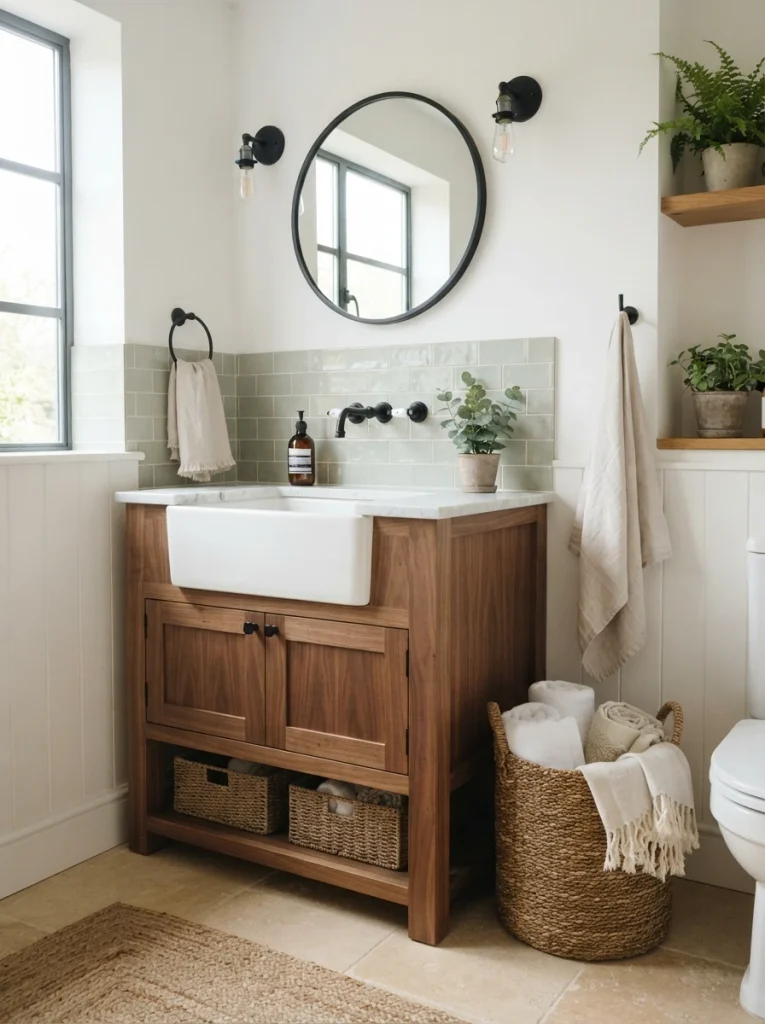
- An apron-front sink instantly adds farmhouse character.
- White ceramic keeps the fixture visually bright.
- A deep basin is useful for everyday cleaning.
- Natural wood cabinetry softens the porcelain surface.
- Matte hardware gives the traditional sink a contemporary update.
An apron-front sink can bring unmistakable farmhouse character to a bathroom while still looking clean and contemporary. Choose a deep white ceramic basin with a simple front profile, then pair it with warm wood cabinetry and understated hardware. The strong white surface creates a crisp focal point against natural materials without requiring additional decoration. I’ve noticed that this type of sink works particularly well when the vanity design stays simple because its distinctive front edge provides enough traditional detail on its own. A matte-black or aged-brass faucet can then introduce contrast while keeping the overall look current.
Think beyond appearance when choosing the basin because a bathroom sink needs to handle everyday routines comfortably. A deeper bowl can be useful for washing hands, cleaning small items, or managing morning routines, but the surrounding countertop should still provide enough landing space. Use a durable material such as quartz or properly sealed stone around the sink to simplify maintenance. Keep accessories minimal and let the ceramic, wood, and hardware provide the visual interest. With balanced proportions, an apron-front basin can bridge traditional farmhouse charm and modern practicality without making the bathroom feel old-fashioned.
Fluted Wood Cabinetry
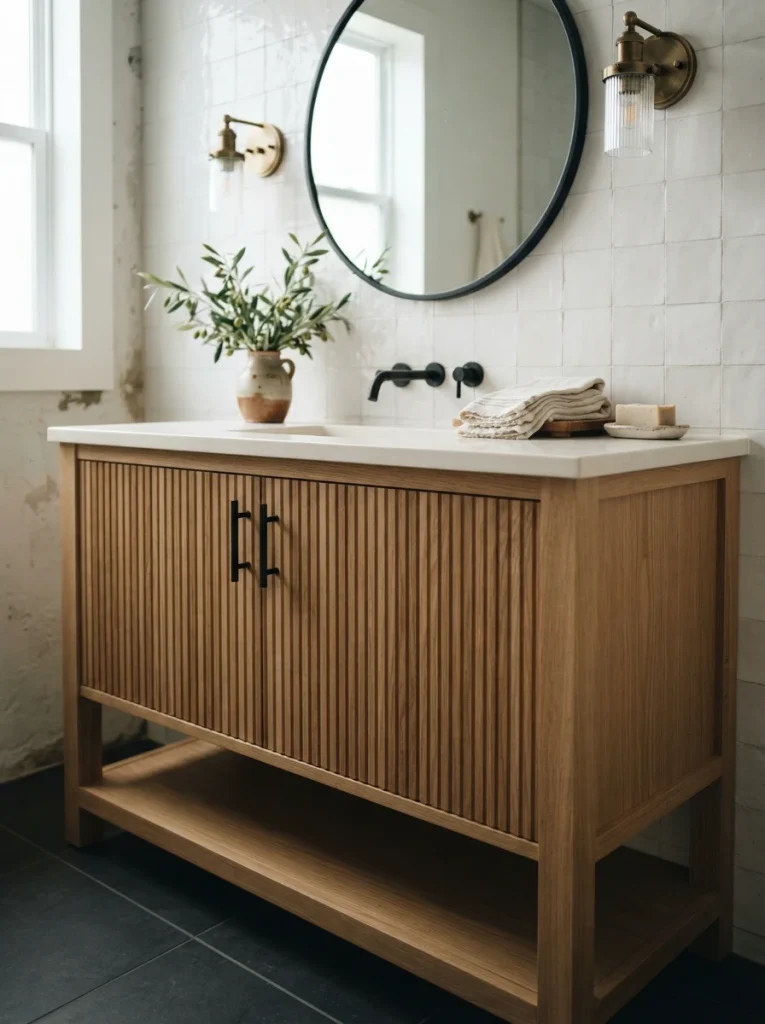
- Vertical fluting adds texture without requiring bold patterns.
- Warm wood creates a natural farmhouse foundation.
- Vertical lines can visually emphasize ceiling height.
- Simple hardware keeps the cabinetry feeling contemporary.
- Closed storage helps maintain a clean bathroom appearance.
Fluted wood cabinetry can add beautiful vertical texture to a modern farmhouse bathroom without relying on elaborate ornament. Choose warm oak or medium walnut with narrow, evenly spaced grooves, then pair it with a simple stone countertop and understated hardware. The vertical lines create subtle shadow and depth while keeping the vanity visually streamlined. In my experience, fluted surfaces work particularly well when the rest of the bathroom uses smooth materials because the contrast makes the cabinetry feel more substantial. The result adds craftsmanship and warmth while preserving the clean appearance expected from a contemporary space.
Use fluting selectively so the textured surface remains a feature rather than becoming visual noise. A vanity front is often enough, especially when the bathroom already includes patterned flooring, textured tile, or decorative lighting. Pair the cabinet with a simple round mirror and one sculptural wall sconce to keep the composition balanced. Warm wood can soften white or pale gray walls, while black or brass hardware adds definition. Choose a moisture-resistant finish and clean the grooves according to the manufacturer’s recommendations. Thoughtful proportions will give the bathroom a polished farmhouse feel with subtle architectural character.
Framed Vanity Mirror
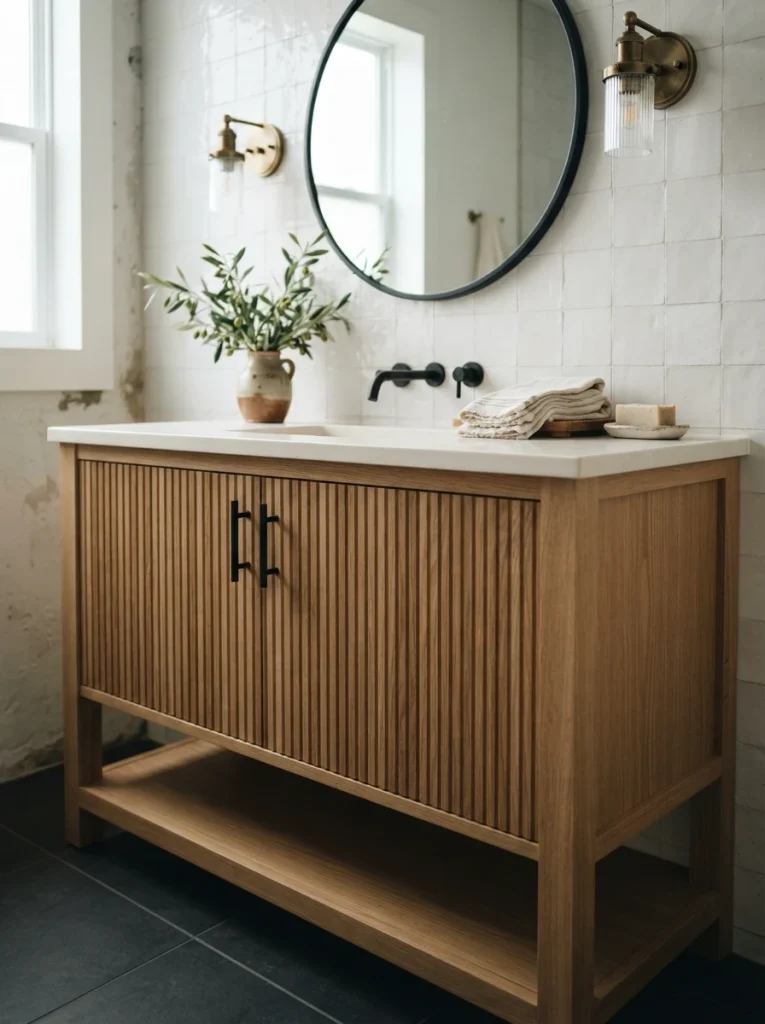
- A framed mirror adds farmhouse character without excessive decoration.
- Black frames create crisp contrast against pale walls.
- Wood frames introduce a softer, warmer look.
- Rounded shapes can balance angular cabinetry.
- A generous mirror helps reflect light around the bathroom.
A framed vanity mirror can instantly make a bathroom feel more finished while adding a subtle farmhouse detail above the sink. Choose a simple wood frame for warmth or a matte-black frame for stronger contrast, depending on the other finishes in the room. A rounded or softly arched shape can also soften a vanity with straight lines. In my experience, the mirror is one of the easiest places to introduce farmhouse personality because it requires no additional floor space. Pair it with simple lighting and uncluttered surfaces so the frame remains noticeable without making the vanity area feel busy.
Scale the mirror to the vanity rather than choosing one based only on appearance. A wider mirror can help a compact bathroom feel more spacious, while a taller shape can emphasize ceiling height. Leave enough room around wall sconces or other lighting so the arrangement feels balanced. Choose a frame material that complements the vanity instead of creating another unrelated finish. Keep the countertop mostly clear, using only practical items such as a soap dispenser or small ceramic cup. When the mirror, vanity, lighting, and wall treatment share a consistent palette, the result feels cohesive, bright, and thoughtfully designed.
Vertical Wall Tile
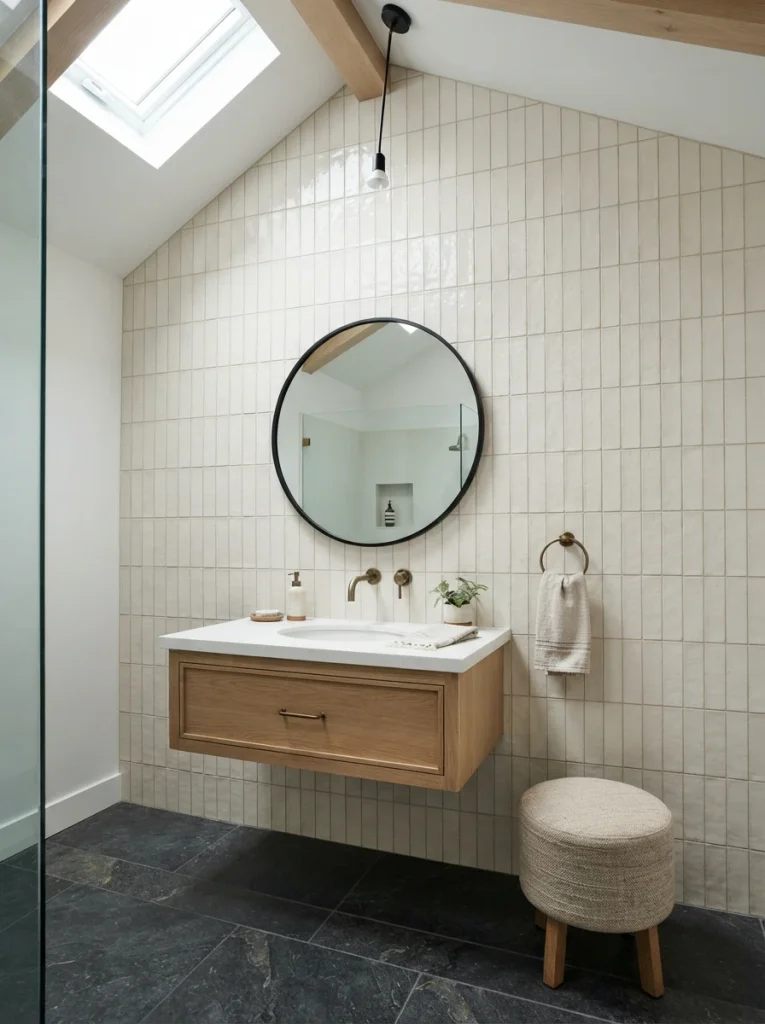
- Vertical tile installation can make the ceiling feel taller.
- Narrow tiles add texture while keeping the walls visually clean.
- Soft neutral colors support the farmhouse palette.
- Light grout creates a seamless, spacious appearance.
- Handmade surfaces add subtle variation without bold patterns.
Vertical wall tile can change the proportions of a bathroom while giving the space a clean, modern farmhouse foundation. Instead of laying subway tile horizontally, install slim rectangular tiles vertically to draw the eye upward and emphasize ceiling height. Cream, soft white, pale taupe, or muted sage can keep the palette warm and understated. I’ve noticed that vertical installation works particularly well in bathrooms with standard or lower ceilings because the direction of the lines creates a subtle sense of height. Pair the tile with natural wood and simple fixtures for a balanced combination of texture and simplicity.
Keep the tile pattern consistent across the main wall so the vertical lines remain visually clear. Handmade or slightly irregular tiles can add character, but avoid overly strong patterns if the bathroom already has decorative flooring. A contrasting dark floor can ground the lighter walls and create a stronger farmhouse-modern connection. Use appropriate bathroom-rated tile and grout for wet areas, especially around showers and tubs. Add simple brass or black hardware and keep accessories minimal. The finished wall feels taller, brighter, and more architectural while still maintaining a comfortable farmhouse atmosphere.
Floating Oak Vanity
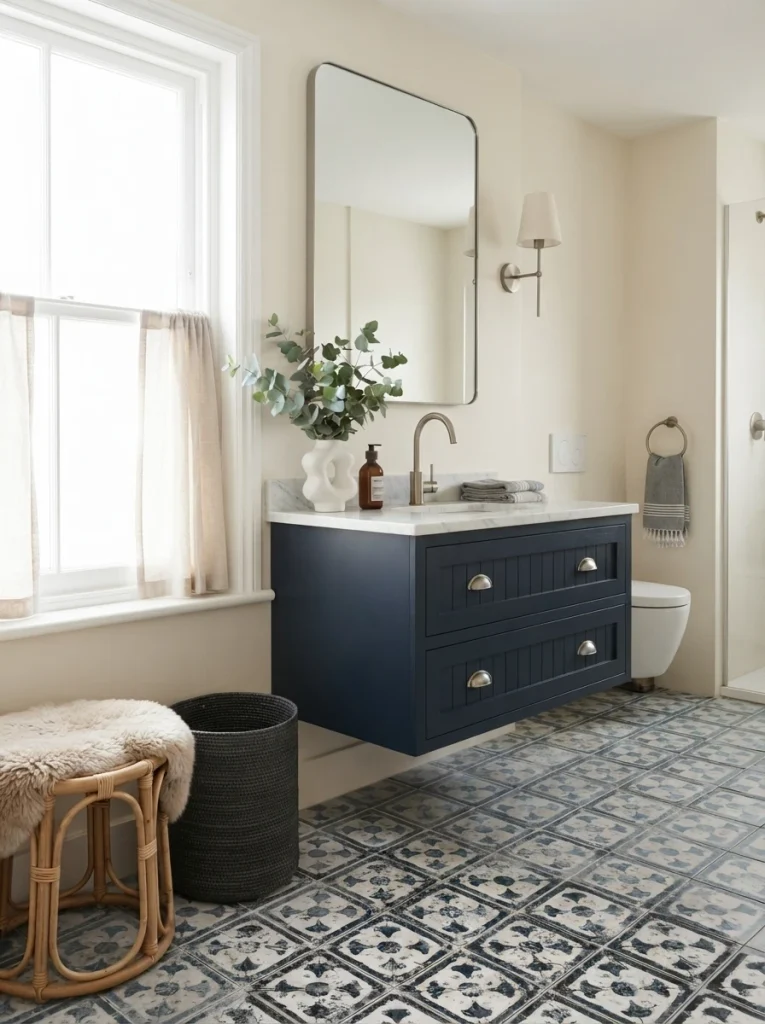
- Wall-mounted cabinetry keeps more flooring visible.
- Natural oak brings warmth to crisp bathroom surfaces.
- Open space beneath the vanity creates an airy feeling.
- Simple hardware keeps the design contemporary.
- A floating profile makes cleaning the floor easier.
A floating oak vanity can make a farmhouse bathroom feel lighter while bringing natural warmth into the space. Mounting the cabinet above the floor leaves a visible strip of flooring underneath, which creates a more open appearance and makes the room easier to clean. Choose oak with a natural matte finish rather than heavily distressed wood for a fresher farmhouse look. In my experience, this style works especially well with cream walls and stone countertops because the wood softens those harder surfaces. The result feels warm, practical, and modern without losing the welcoming character of farmhouse design.
Keep the vanity shape simple and let the wood grain provide most of the visual interest. Pair it with a rounded mirror, understated faucet, and one small woven accessory to create a balanced composition. The open area below the cabinet can remain completely clear, or you can place a small stool there when additional storage or seating is useful. Choose moisture-resistant finishes designed for bathroom conditions and avoid allowing standing water to collect around the cabinet. With thoughtful proportions and durable materials, a floating oak vanity creates an airy focal point that combines everyday function with timeless farmhouse warmth.
Farmhouse Pendant Lights
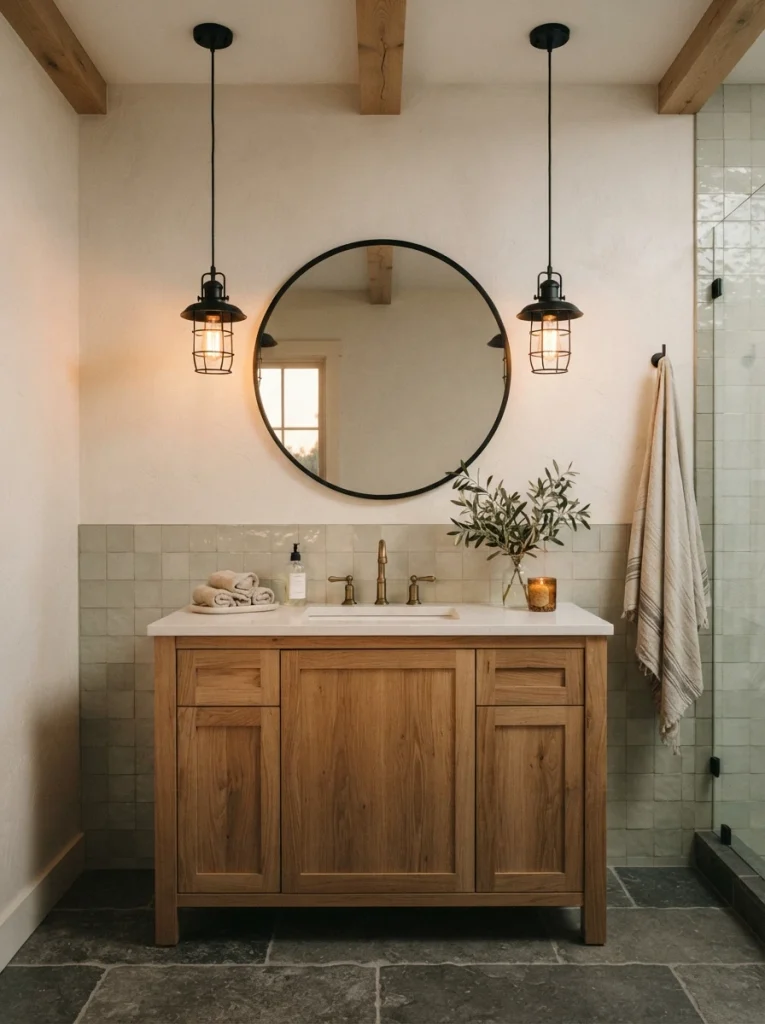
- Pendant lighting adds a decorative focal point above the vanity.
- Black metal creates crisp contrast against light finishes.
- Clear glass shades keep the room visually open.
- Warm bulbs make natural wood tones feel richer.
- Matching metal details create a cohesive bathroom design.
Farmhouse pendant lights can bring character and warmth to a bathroom while providing focused illumination around the vanity. Choose simple black metal, aged brass, or clear glass designs that complement the room’s existing finishes. Hanging two matching fixtures beside a mirror can create symmetry, while one sculptural pendant can work beautifully in a smaller space. In my experience, lighting often has a bigger effect on atmosphere than expected because it changes how every material appears. Warm bulbs can make oak, cream tile, and natural textiles feel richer while keeping the bathroom comfortable and inviting.
Consider the fixture’s scale, mounting position, and moisture suitability before installation. Pendant lights should provide useful illumination without hanging so low that they interfere with everyday movement around the vanity. Clear glass shades can preserve an open appearance, while darker metal frames add definition against pale walls. Keep the rest of the lighting relatively simple so the pendants remain visually important. Repeat their finish through cabinet hardware or faucet details for cohesion. When carefully positioned, farmhouse-inspired pendants can turn an ordinary vanity area into a polished focal point that feels warm, practical, and distinctly modern.
Linen Shower Curtains
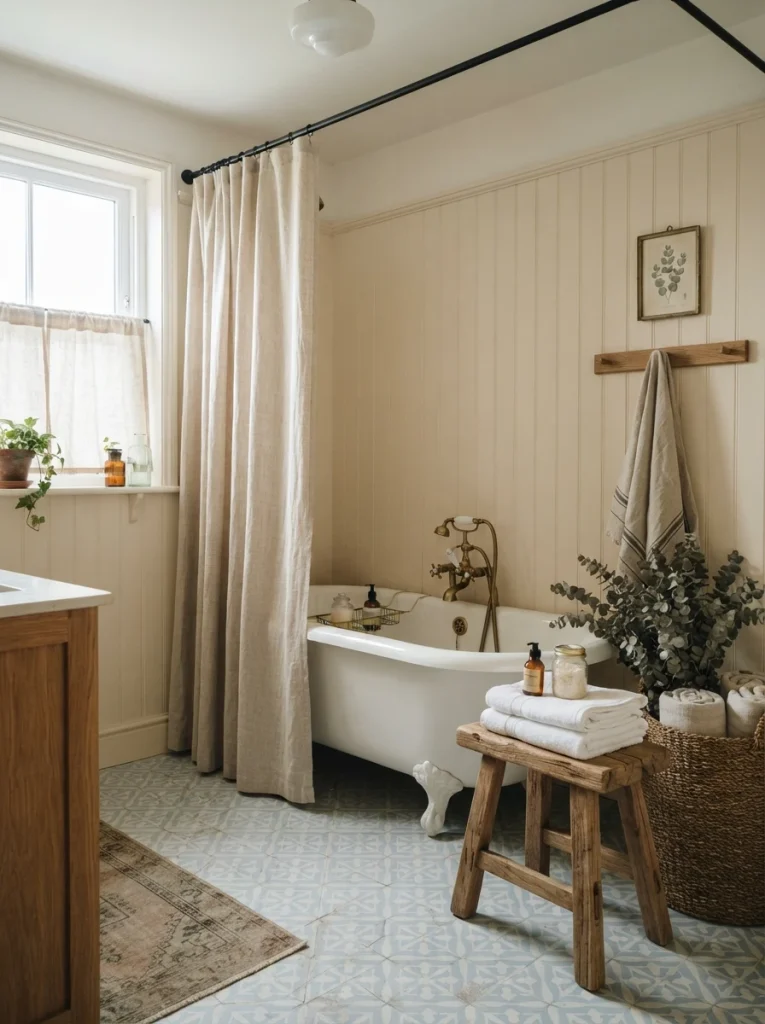
- Linen-style curtains soften hard tile and glass surfaces.
- Neutral fabric keeps the bathroom feeling bright.
- Subtle texture adds farmhouse warmth without busy patterns.
- Full-length curtains can visually emphasize ceiling height.
- Machine-washable options make everyday maintenance easier.
A linen shower curtain can soften a modern farmhouse bathroom and introduce the relaxed texture of natural fabric. Choose oatmeal, ivory, soft gray, or muted sage rather than strong patterns so the curtain complements the room without competing with tile or cabinetry. A slightly textured fabric can add depth to an otherwise simple shower area. I’ve noticed that soft textiles are especially helpful in bathrooms filled with hard surfaces because they make the room feel warmer and more comfortable. Pair the curtain with natural wood, woven storage, and simple hardware for an effortless farmhouse-inspired look.
Choose a curtain long enough to create a clean vertical line without dragging on the floor. A matte-black or aged-brass rod can connect the textile to other fixtures and hardware throughout the bathroom. Keep the surrounding shower area relatively simple so the fabric remains the soft focal point. If privacy and moisture resistance are important, use an appropriate waterproof liner behind the decorative curtain. Wash and dry the fabric according to its care instructions to prevent buildup. The finished space feels softer, more welcoming, and comfortably lived-in while retaining a clean contemporary foundation.
Natural Stone Countertop
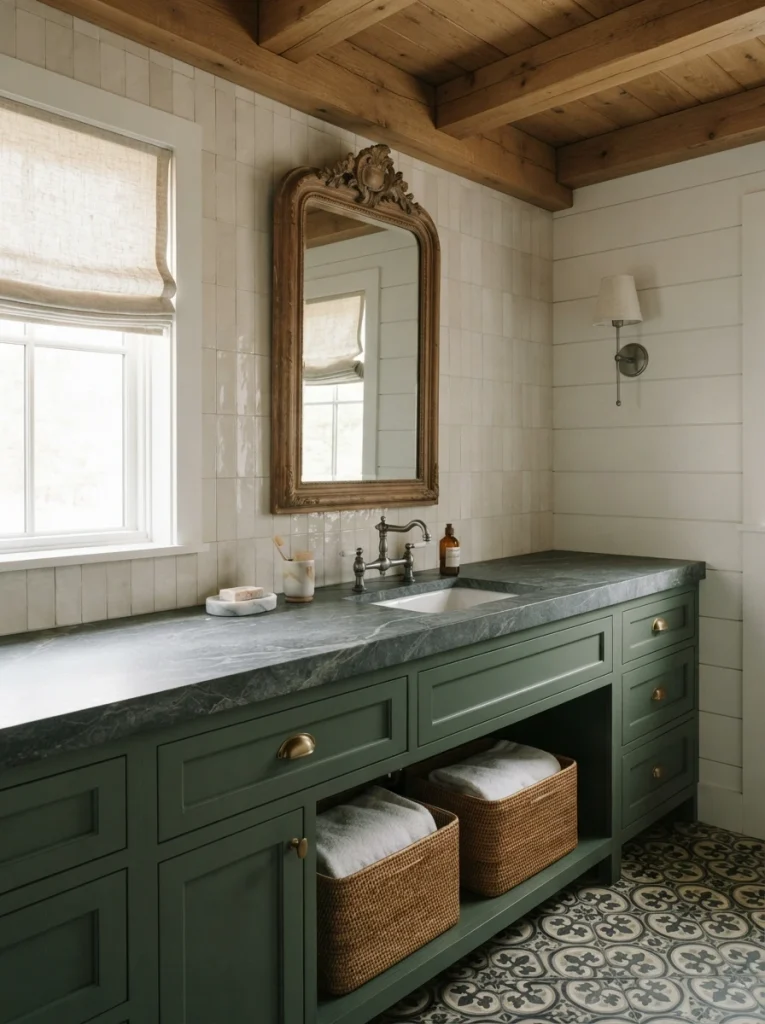
- Natural stone adds texture and durability around the vanity.
- Soft veining creates visual interest without bold patterns.
- Warm stone works beautifully with oak cabinetry.
- Matte surfaces reinforce the understated farmhouse aesthetic.
- Neutral tones make future decor changes easier.
A natural stone countertop can give a farmhouse bathroom an elevated finish while keeping the materials feeling warm and grounded. Travertine, limestone, quartzite, and softly veined marble can all complement natural wood cabinetry beautifully. Choose a surface with gentle variation rather than dramatic veining if you want the room to remain calm. In my experience, warm stone helps bridge the gap between rustic and contemporary details because it feels organic while still looking polished. Pair the countertop with a simple sink, understated faucet, and uncluttered vanity so the natural material remains the main visual feature.
Consider durability and maintenance before choosing a stone surface, especially around a frequently used bathroom sink. Some natural stones require sealing and more careful cleaning than engineered alternatives, so follow the manufacturer’s care recommendations. Keep the surrounding palette simple with cream tile, warm wood, or muted green accents. A small ceramic vessel and folded linen towels can add texture without covering the countertop. Let daylight reveal the stone’s subtle variations, then use warm evening lighting to create a softer appearance after dark. The finished vanity feels durable, refined, and naturally connected to farmhouse-inspired materials.
Freestanding Wood Stool
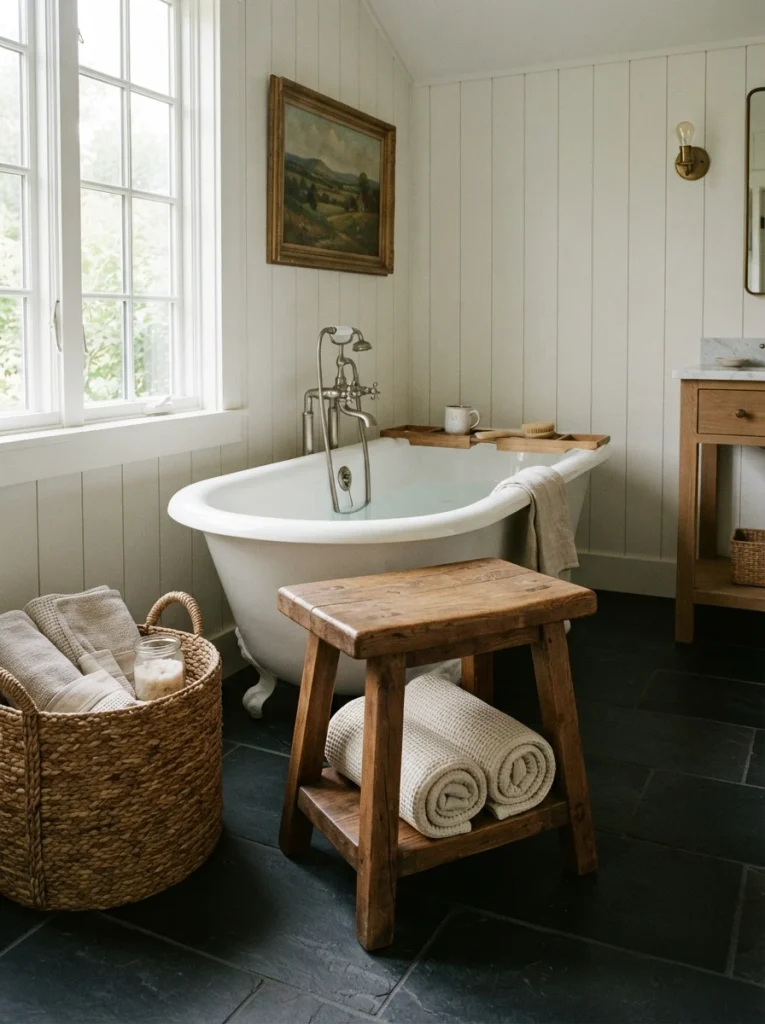
- A wooden stool adds useful seating without taking much space.
- Natural grain reinforces the farmhouse material palette.
- It can hold folded towels or everyday bath essentials.
- A simple shape prevents the bathroom from feeling cluttered.
- Lightweight construction makes it easy to move when needed.
A freestanding wood stool is a small addition that can make a farmhouse bathroom feel more useful and welcoming. Choose a simple stool in oak, teak, or walnut and place it beside the tub, shower, or vanity. Its natural grain introduces warmth without requiring another large furniture piece. In my experience, a compact stool becomes surprisingly useful because it can hold folded towels, bath products, clothing, or a small plant while also serving as occasional seating. Look for a moisture-appropriate finish and a sturdy construction that can handle regular bathroom conditions.
Keep the stool visually simple so it supports the room instead of becoming another focal point. A round or softly shaped seat can contrast nicely with rectangular tile and cabinetry, while straight legs create a more traditional farmhouse appearance. Place a neatly folded linen towel across the top when you want an easy decorative touch, but leave enough surface available for practical use. Avoid positioning it where it blocks drawers, doors, or walking paths. Combined with natural wood cabinetry and woven accessories, the stool adds a relaxed finishing layer that feels functional rather than purely decorative.
Soft Sage Walls
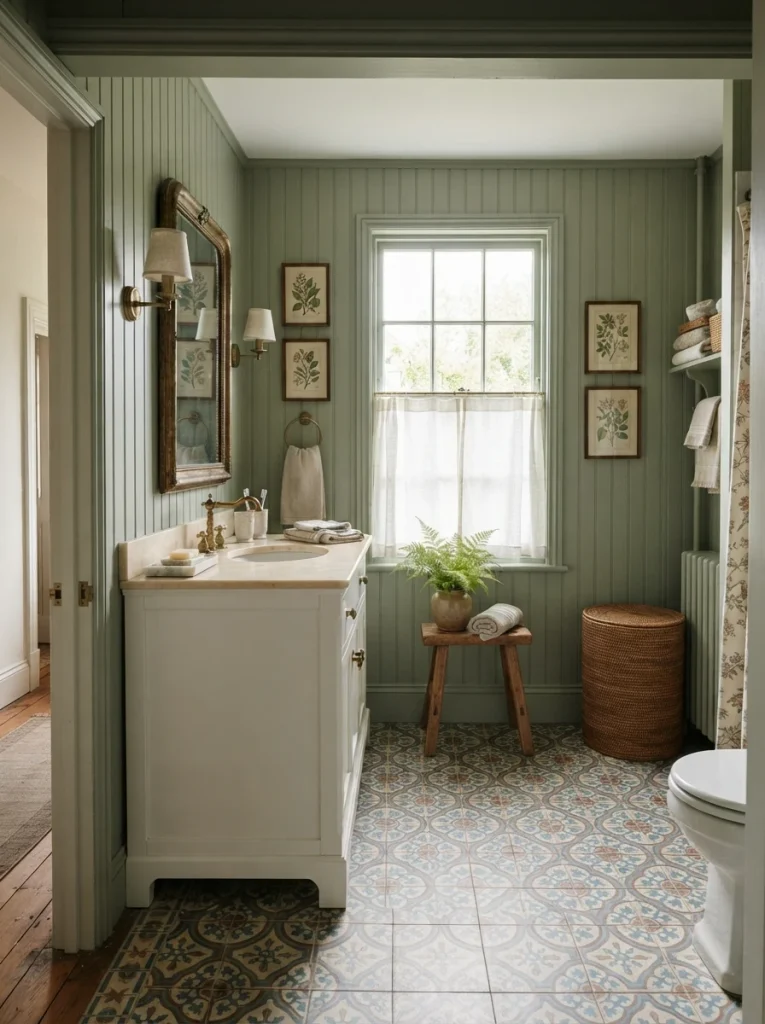
- Sage green brings gentle color into a neutral farmhouse bathroom.
- Muted tones feel calmer than brighter greens.
- The shade pairs naturally with warm wood.
- Soft walls can make white fixtures feel less stark.
- Repeating sage through towels or plants creates cohesion.
Soft sage walls can give a farmhouse bathroom a fresh, calming personality without making the space feel overly colorful. The muted green works beautifully with warm oak, creamy tile, white porcelain, and natural woven materials. Unlike stronger greens, a dusty sage shade adds character while remaining easy on the eyes. I’ve noticed that this color is especially effective in bathrooms with plenty of natural light because daylight brings out its subtle gray and earthy undertones. The result is a relaxed backdrop that feels contemporary while still connecting naturally with the familiar warmth of farmhouse-inspired interiors.
Keep the rest of the palette restrained so the wall color can remain the main source of visual personality. Cream towels, natural wood, aged brass, and soft beige accessories can complement sage without creating unnecessary contrast. If the bathroom has limited daylight, test paint samples at different times before committing because green tones can change noticeably under artificial lighting. Repeat a small amount of sage through towels, artwork, or a ceramic accessory for a cohesive finish. With simple fixtures and uncluttered surfaces, soft sage walls can make the bathroom feel brighter, warmer, and more inviting without sacrificing its modern character.
White Oak Shelving
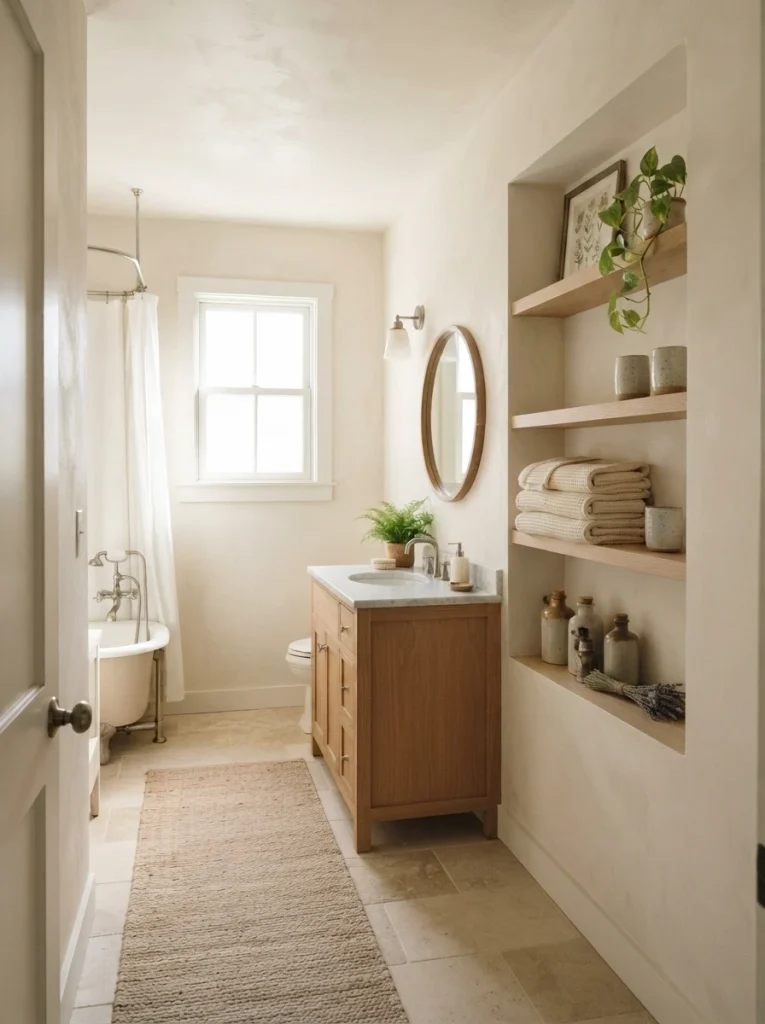
- Open shelves add useful storage without bulky upper cabinets.
- White oak introduces warmth against pale bathroom surfaces.
- Displayed towels can become part of the decor.
- Simple shelves keep everyday items easy to reach.
- A limited display prevents open storage from looking cluttered.
White oak shelving can add warmth and practical storage while keeping a farmhouse bathroom feeling open. Install one or two floating shelves beside the vanity, shower, or bathtub where everyday items are easy to reach. The pale wood grain creates gentle contrast against white tile and painted walls without making the room feel heavy. In my experience, open shelving works best when it displays useful items such as folded towels, baskets, or simple ceramic containers. This keeps the arrangement functional while allowing the natural material to contribute visual warmth and farmhouse character.
Avoid filling every inch of the shelves because negative space helps maintain a modern appearance. Fold towels into neat stacks, then add one woven basket for smaller toiletries and a small plant for natural color. Choose shelf brackets carefully if you prefer a more traditional farmhouse appearance, or use concealed supports for a cleaner look. Keep the displayed palette limited to cream, wood, muted green, and one earthy accent. This creates an organized arrangement that feels intentional rather than crowded. Properly sealed wood and appropriate installation will also help the shelves withstand normal bathroom conditions.
Clawfoot Tub Update
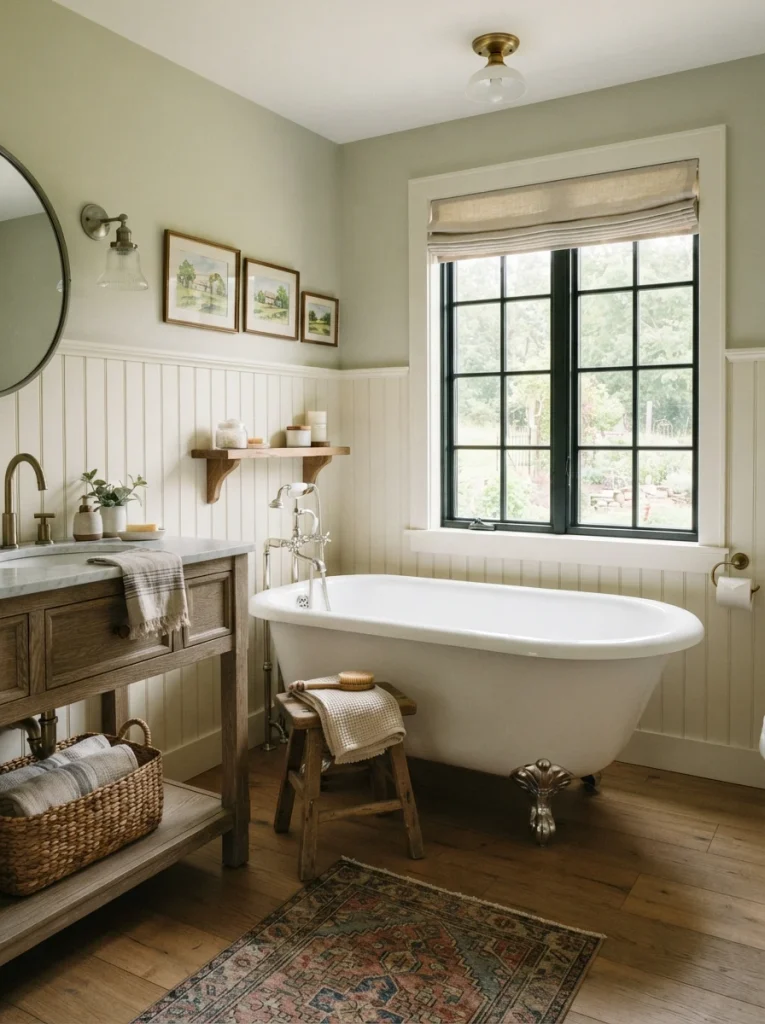
- A classic tub brings traditional farmhouse character instantly.
- Modern fixtures keep the silhouette feeling fresh.
- Matte finishes can update an otherwise vintage feature.
- A small stool provides practical bath-side storage.
- Neutral surroundings prevent the tub from looking overly traditional.
A clawfoot tub can bring timeless farmhouse character to a bathroom while still feeling modern with the right surrounding details. Choose a clean white tub with simple feet and pair it with contemporary black or aged-brass plumbing. Keep the walls understated with warm plaster, pale tile, or soft paint so the classic silhouette remains the main feature. I’ve noticed that traditional pieces feel much fresher when they are surrounded by fewer decorative details. A natural wood stool, woven basket, and simple linen towel can provide enough warmth without turning the bathroom into a vintage display.
Position the tub where there is enough space to appreciate its shape and clean around all sides comfortably. A window nearby can provide natural light and make the bathing area feel more spacious, while a small stool can hold towels or bath products. Avoid placing too many accessories around the tub because its curved profile already creates visual interest. Choose durable, moisture-appropriate materials and maintain clear pathways around the fixture. Combining one traditional element with streamlined surfaces creates a balanced look that feels comfortably farmhouse-inspired while remaining current, practical, and visually relaxed.
Black Window Grid
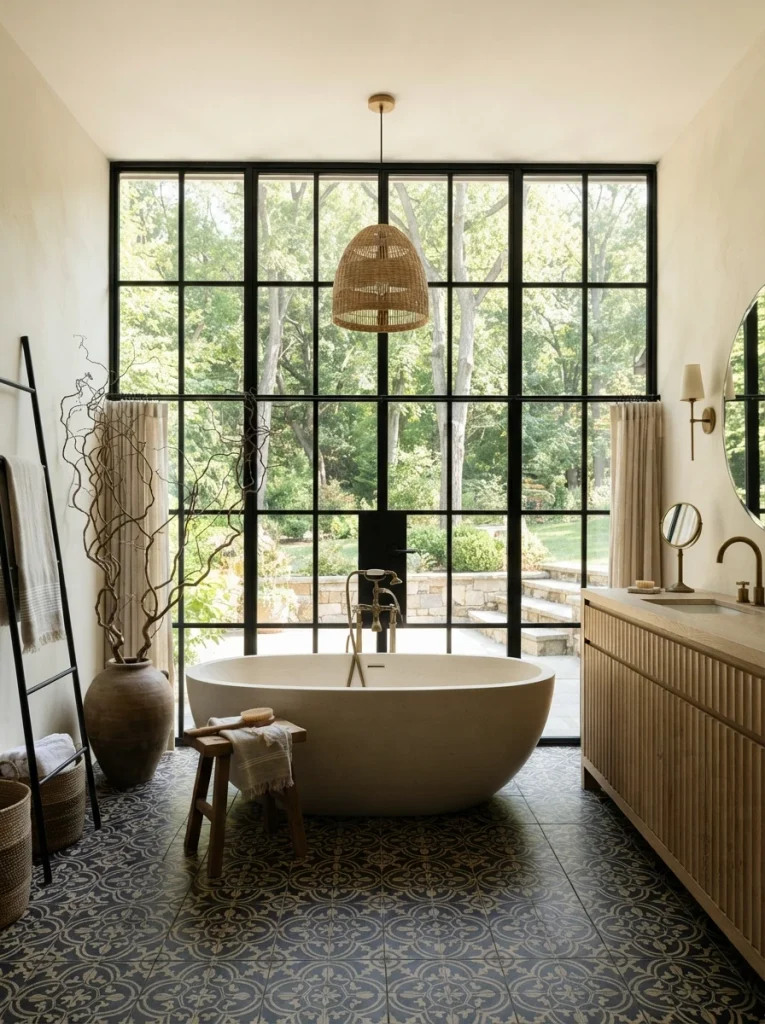
- A black window grid adds architectural definition.
- Dark framing creates contrast against white walls.
- Glass keeps the bathroom feeling bright and open.
- The grid pattern can echo black hardware elsewhere.
- Simple window treatments preserve the strong architectural detail.
A black window grid can give a farmhouse bathroom a strong architectural focal point while keeping the overall design bright and contemporary. The dark framework creates crisp contrast against creamy plaster, white tile, or soft neutral walls, while the glass allows natural light to remain dominant. In my experience, this detail works especially well when the bathroom already includes black hardware because repeating the finish creates visual consistency. Keep the surrounding furniture simple so the window remains the star. A warm wood vanity or stool can soften the darker frame and prevent the room from feeling too stark.
Let the window provide structure without covering it with heavy treatments that hide the grid. If privacy is needed, choose lightweight linen panels, a discreet shade, or textured privacy glass depending on the room’s location. Repeat the black finish through a mirror frame, faucet, or small lighting detail, but avoid using it everywhere. Natural daylight will emphasize the contrast between the dark frame and pale surfaces, while simple warm lighting can maintain the balance after sunset. The finished bathroom feels crisp, spacious, and characterful, blending farmhouse architecture with a clean modern aesthetic.
Concrete Vanity Top
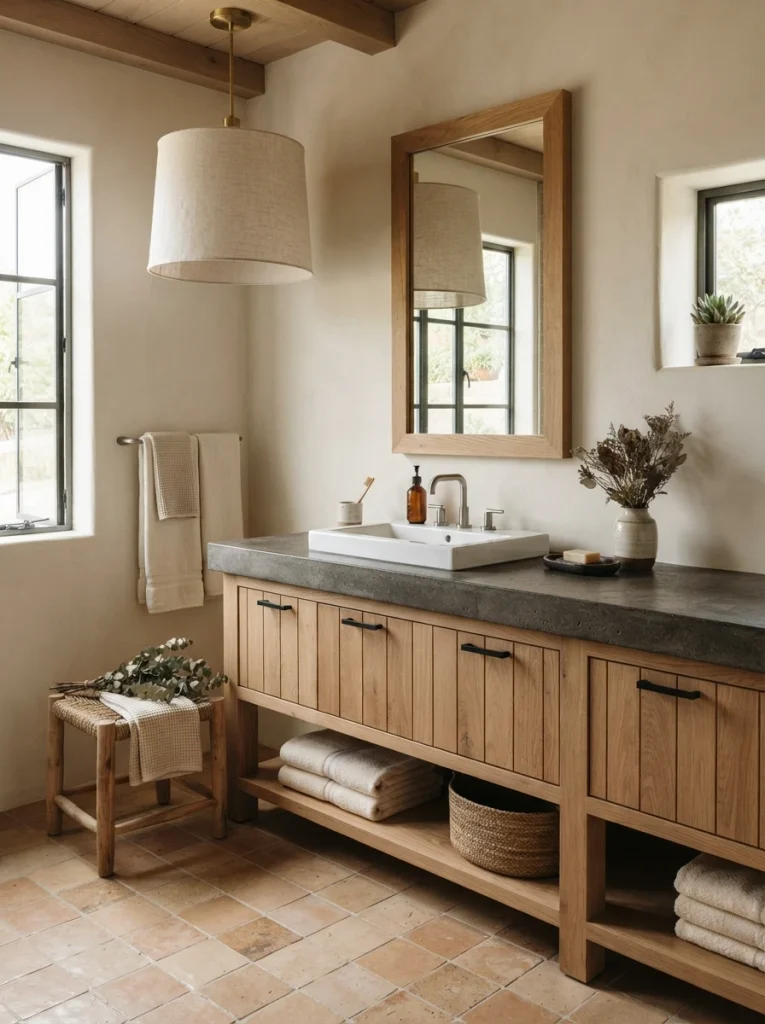
- Concrete adds an understated industrial touch to farmhouse styling.
- Its matte surface contrasts beautifully with warm wood.
- Soft gray tones keep the bathroom visually grounded.
- Simple edges maintain a clean contemporary appearance.
- Sealed surfaces can make everyday cleaning easier.
A concrete vanity top can give a farmhouse bathroom a subtle contemporary edge while maintaining the natural, understated character of the style. Its soft gray tone pairs beautifully with warm oak, white ceramic, and aged metal finishes, creating contrast without relying on bold colors. Choose a smooth, lightly textured surface rather than a heavily industrial finish if you want a softer appearance. In my experience, concrete works particularly well when the cabinetry is warm because the cooler countertop balances the wood. The result feels substantial, modern, and relaxed rather than overly rustic or industrial.
Because bathroom countertops experience regular moisture and spills, choose an appropriately sealed surface and follow recommended care instructions. Keep the vanity design simple so the countertop remains visually important without dominating the room. Warm brass or matte-black hardware can provide definition, while cream walls and woven accessories soften the cooler material. A small ceramic vessel or folded linen towel is enough to finish the vanity area. Good natural light will reveal subtle variations across the surface throughout the day. Used thoughtfully, concrete creates a sophisticated farmhouse foundation that feels durable, practical, and visually distinctive.
Reclaimed Wood Shelves
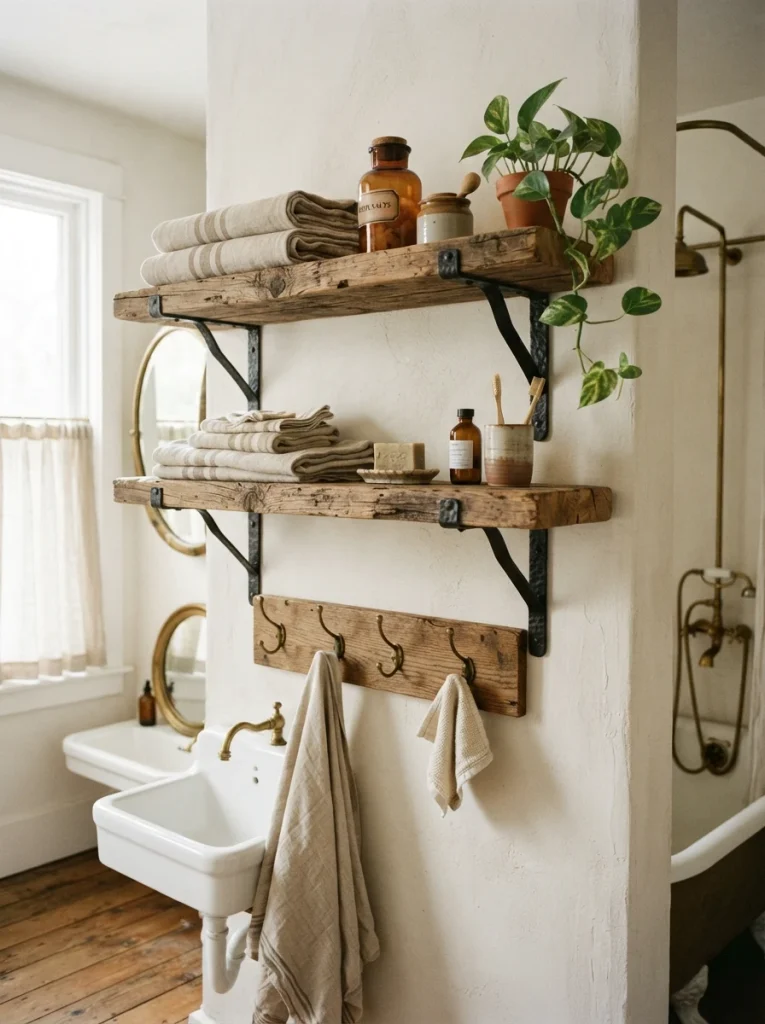
- Reclaimed wood introduces authentic farmhouse character.
- Visible knots and grain create natural texture.
- Open shelving keeps everyday towels within reach.
- Darker wood contrasts beautifully with pale tile.
- A few curated accessories prevent the shelves from looking cluttered.
Reclaimed wood shelves can add authentic farmhouse warmth while providing useful storage in a bathroom with limited cabinetry. Choose boards with visible grain, knots, and subtle tonal variation, then install one or two shelves above a toilet, beside the vanity, or along an unused wall. The natural imperfections give the room character without requiring additional decorative pieces. I’ve noticed that reclaimed wood looks especially balanced against clean white tile because the contrast makes both materials more noticeable. Keep the shelf styling practical with folded towels, simple containers, and one small plant rather than filling every available space.
Select properly treated wood and use secure mounting hardware suitable for the wall structure and expected load. Because bathroom humidity can affect natural materials, follow appropriate sealing and maintenance recommendations. Arrange objects at different heights to create an easy visual rhythm, leaving empty areas between groups. Darker wood can anchor a bright bathroom, while lighter reclaimed boards create a softer appearance. Repeat the wood tone through a stool or vanity if possible. The finished shelves combine storage with personality, giving the bathroom a collected farmhouse feel while keeping everyday essentials organized and accessible.
Textured Wall Plaster
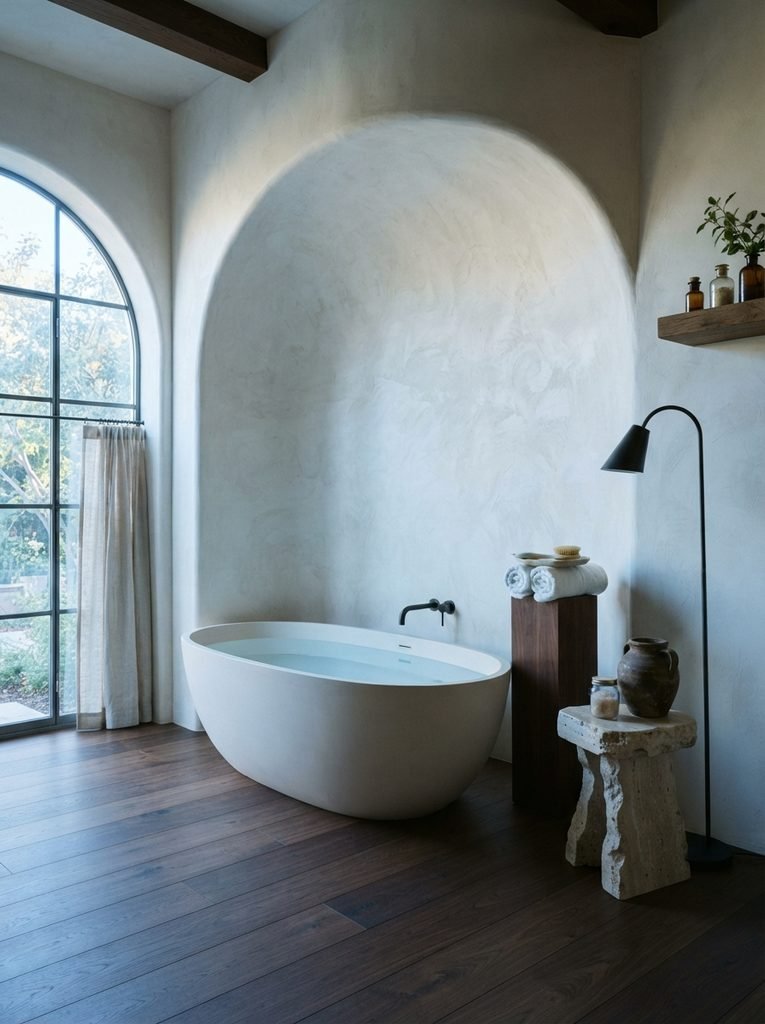
- Textured plaster creates depth without decorative patterns.
- Matte surfaces complement natural farmhouse materials.
- Warm white tones keep the bathroom bright.
- Subtle imperfections make the room feel handcrafted.
- Minimal accessories allow the wall texture to stand out.
Textured wall plaster can give a farmhouse bathroom quiet character without relying on busy tile patterns or excessive decoration. A warm white, creamy beige, or soft greige plaster finish creates subtle variation across the walls while keeping the room bright and relaxed. In my experience, this approach works especially well when the bathroom already includes natural wood and stone because the imperfect surface adds another organic layer without competing with them. Choose a matte finish and keep the texture relatively subtle so the walls feel handcrafted rather than heavily decorative. The result is warm, sophisticated, and comfortably understated.
Balance textured walls with smoother surfaces elsewhere in the bathroom so the room does not feel visually overwhelming. A simple oak vanity, clean stone countertop, and understated fixtures can provide enough contrast to make the plaster texture noticeable. Natural daylight will reveal gentle shadows across the surface, while warm evening lighting can create a softer, more intimate atmosphere. Avoid covering every wall with accessories; instead, allow the plaster itself to become part of the decoration. With appropriate bathroom-grade materials and professional installation where needed, textured plaster can create a timeless backdrop that blends farmhouse warmth with modern simplicity.
Farmhouse Floating Shelves
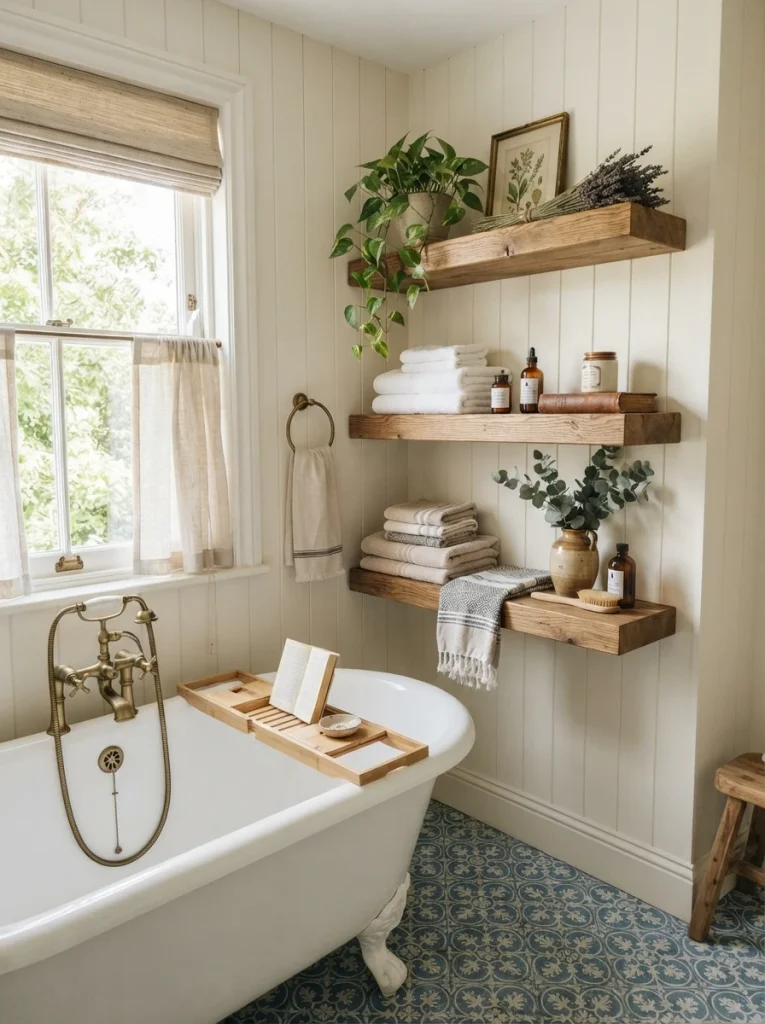
- Floating shelves add storage without bulky cabinetry.
- Natural wood introduces warmth against pale bathroom walls.
- Open storage keeps everyday towels within reach.
- Simple styling prevents the shelves from feeling crowded.
- Matching wood tones create a cohesive farmhouse finish.
Farmhouse floating shelves can make unused wall space practical while adding warmth and personality to the bathroom. Choose natural oak, walnut, or lightly reclaimed wood and install two or three slim shelves where they will not interfere with doors, mirrors, or daily movement. Their open design keeps the room visually lighter than bulky cabinets. I’ve noticed that shelves look most polished when they hold a mixture of useful and decorative pieces rather than becoming crowded storage zones. Folded towels, simple ceramic containers, and one small plant can provide enough texture to make the arrangement feel intentional.
Keep the styling restrained so the shelves support the bathroom instead of becoming the main source of clutter. Group similar items together and leave visible gaps between objects to create breathing room. Use properly sealed wood and secure mounting hardware designed for the wall type and expected load. A darker wood can anchor a bright bathroom, while pale oak keeps the atmosphere airy. Repeat the shelf finish through a vanity, stool, or small accessory when possible. The finished arrangement provides convenient storage while reinforcing the relaxed, natural character that makes farmhouse bathrooms feel comfortable and welcoming.
Soft Linen Towels
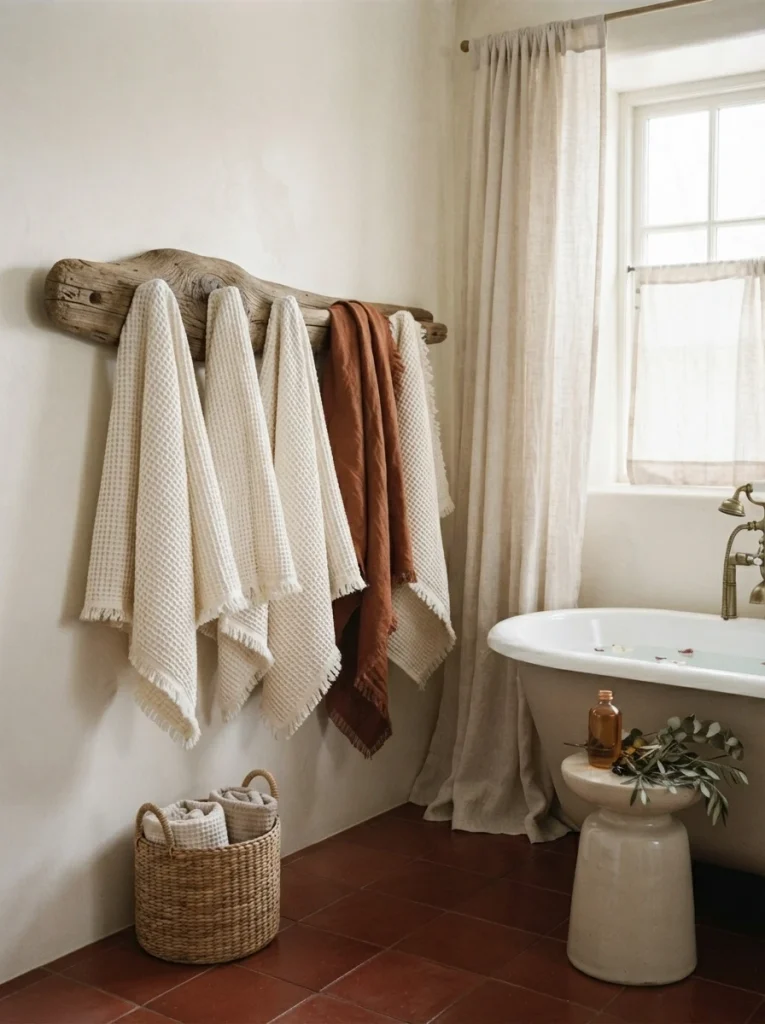
- Linen towels add softness and natural texture.
- Neutral shades keep the bathroom visually calm.
- Earthy colors can introduce subtle farmhouse personality.
- Rolled or folded towels create an easy decorative moment.
- Natural fibers complement wood, stone, and woven accessories.
Soft linen towels can make a farmhouse bathroom feel warmer and more inviting with almost no structural changes. Choose natural shades such as oatmeal, cream, muted sage, dusty blue, or warm clay, then fold or roll them neatly on a ladder, shelf, or towel rail. Their relaxed texture pairs beautifully with wood, stone, and woven materials. In my experience, textiles are one of the simplest ways to refresh a bathroom because they can introduce a new color or texture without replacing permanent fixtures. A small collection of coordinated towels can make the entire space feel more finished.
Keep the color palette controlled so the towels complement rather than compete with the bathroom’s larger features. If the walls are white, muted earthy tones can provide gentle contrast, while cream towels work beautifully against sage or blue surfaces. Choose absorbent fabrics suited to regular washing and allow towels to dry properly between uses. A wooden ladder or simple black hooks can provide attractive display space without requiring additional cabinetry. Add one woven basket nearby for extra texture. These small details create a comfortable, lived-in atmosphere while maintaining the clean and practical qualities of modern farmhouse design.
Farmhouse Sconce Pair
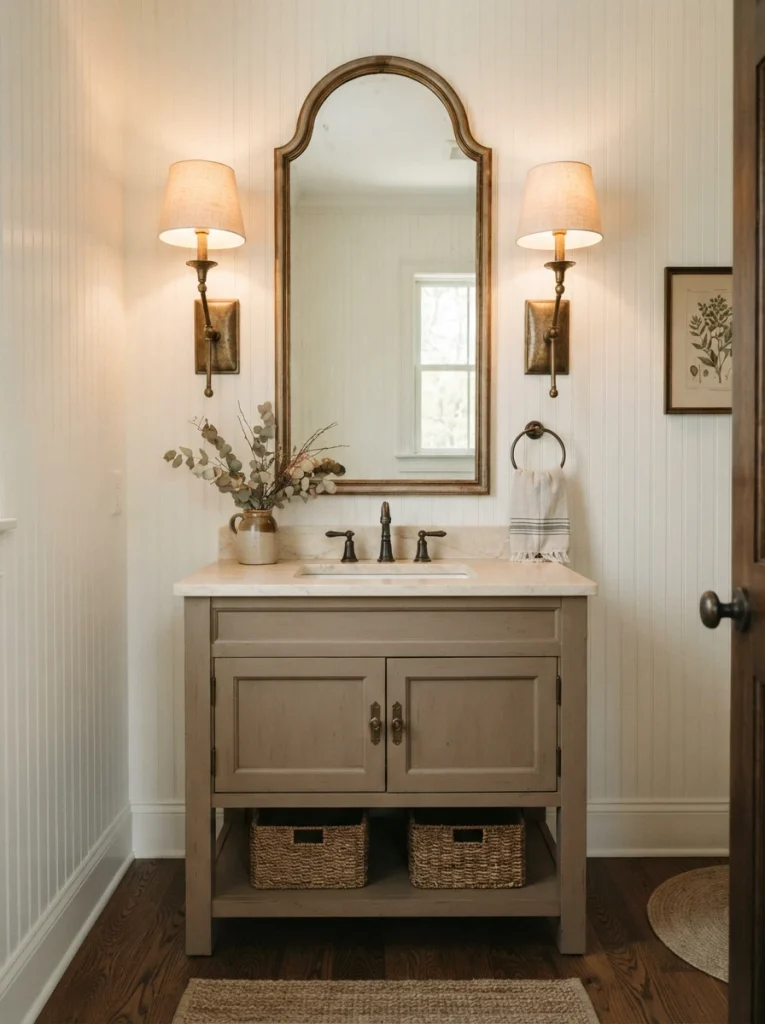
- Matching sconces create balanced vanity lighting.
- Black metal adds definition against light walls.
- Clear or frosted shades soften the illumination.
- Symmetrical placement makes the vanity feel polished.
- Warm bulbs complement wood and brass finishes.
A pair of farmhouse sconces can make a bathroom vanity feel more polished while providing useful light for everyday routines. Place matching fixtures on both sides of the mirror rather than relying only on overhead illumination. Matte-black metal works beautifully with white tile and warm wood, while aged brass creates a softer vintage influence. In my experience, side lighting is especially helpful around a vanity because it can provide more even illumination for grooming. Choose simple shades and clean silhouettes so the fixtures feel farmhouse-inspired without looking overly traditional or decorative.
Pay attention to the height and spacing of the sconces so the lighting feels balanced around the mirror. Keep the surrounding wall treatment relatively simple, especially if the sconces have distinctive shades or metalwork. Warm bulbs can complement oak cabinetry and cream surfaces, creating a comfortable atmosphere in the evening. Make sure fixtures are appropriately rated and installed for bathroom conditions, particularly near sinks and wet areas. Repeat the sconce finish through cabinet pulls or faucet hardware for cohesion. The result is a functional lighting upgrade that adds symmetry, warmth, and modern farmhouse character.
Modern Farmhouse Contrast
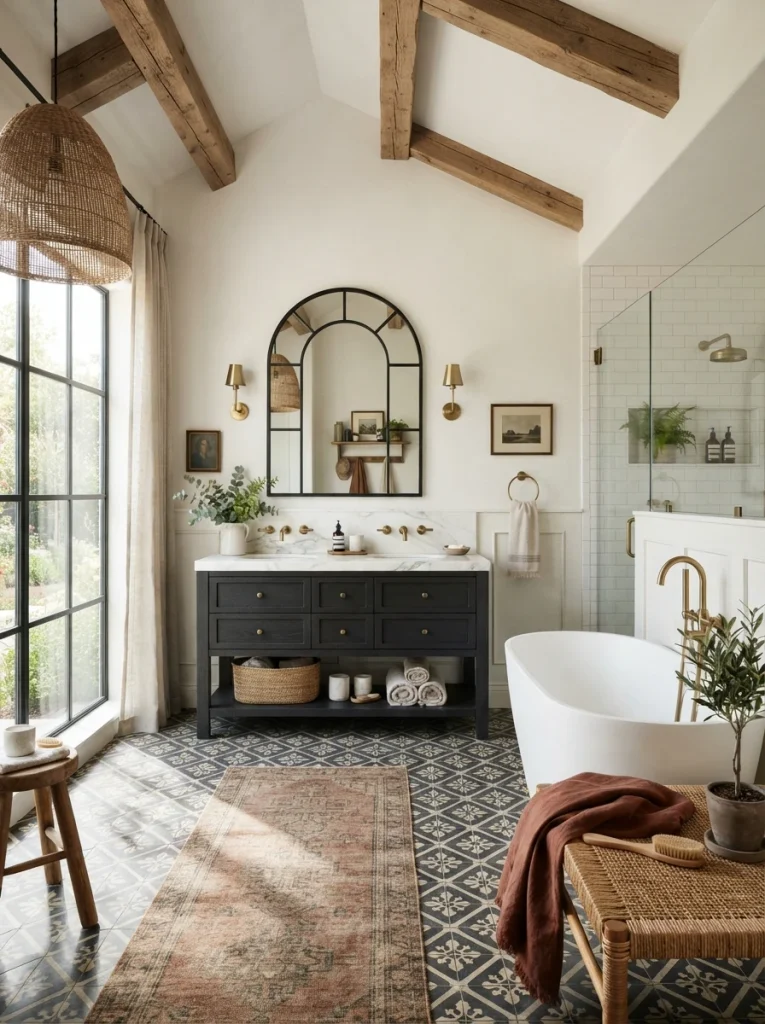
- Mixing rustic and contemporary finishes keeps the bathroom current.
- Dark accents provide definition against light farmhouse surfaces.
- Natural wood prevents high-contrast elements from feeling harsh.
- Simple shapes maintain a clean modern appearance.
- Repeated materials create cohesion throughout the space.
The strongest farmhouse bathrooms often come from balancing old and new instead of choosing only one direction. Combine warm oak, classic white surfaces, and handcrafted ceramics with crisp black fixtures, streamlined cabinetry, or contemporary lighting. This contrast gives the room personality while preventing it from feeling overly rustic or dated. In my experience, pairing one traditional feature with several clean modern elements creates a more timeless result than matching every detail to the same farmhouse style. The key is restraint: let natural materials provide warmth while sharper finishes add definition and a fresh contemporary edge.
Use contrast thoughtfully by repeating important finishes throughout the bathroom. If you choose a black-framed mirror, echo the dark tone through the faucet or lighting, then soften it with warm wood and cream textiles. Keep the flooring and walls relatively calm when several contrasting materials are already present. Natural daylight can highlight differences between stone, wood, ceramic, and metal, while warm evening lighting makes the room feel more inviting. Choose durable, bathroom-appropriate materials and prioritize comfortable circulation. The finished space feels layered and sophisticated, combining farmhouse warmth with modern clarity without becoming visually overwhelming.
Transform Your Bathroom With Farmhouse Style
The beauty of farmhouse style is that you do not need a complete renovation to make your bathroom feel warmer and more characterful. Start with one feature that catches your eye, such as a wood vanity, patterned floor, vintage-inspired fixture, or textured wall, then build the rest of the room around it. These Modern Farmhouse Bathroom Ideas can help you create a space that feels organized, comfortable, and visually timeless. Save this post on Pinterest so you can return to your favorite ideas while planning your update, and share it with someone who loves farmhouse interiors. Even a few thoughtful changes can make an everyday bathroom feel special.
