Want a living room that feels beautifully relaxed without looking cluttered? Minimalist bohemian living room ideas can help you create that balance with natural textures, earthy colors, simple furniture, and meaningful accents. This style combines the peaceful simplicity of minimalism with the warmth and personality of bohemian decorating, making it especially appealing if you love cozy spaces that still feel open and breathable. From woven rugs and rattan chairs to handcrafted ceramics, soft textiles, natural wood, and thoughtfully placed plants, these ideas show how small styling choices can completely change the atmosphere. In my experience, the most inviting rooms are not filled with things—they simply give each beautiful piece enough space to shine.
Layered Neutral Textures
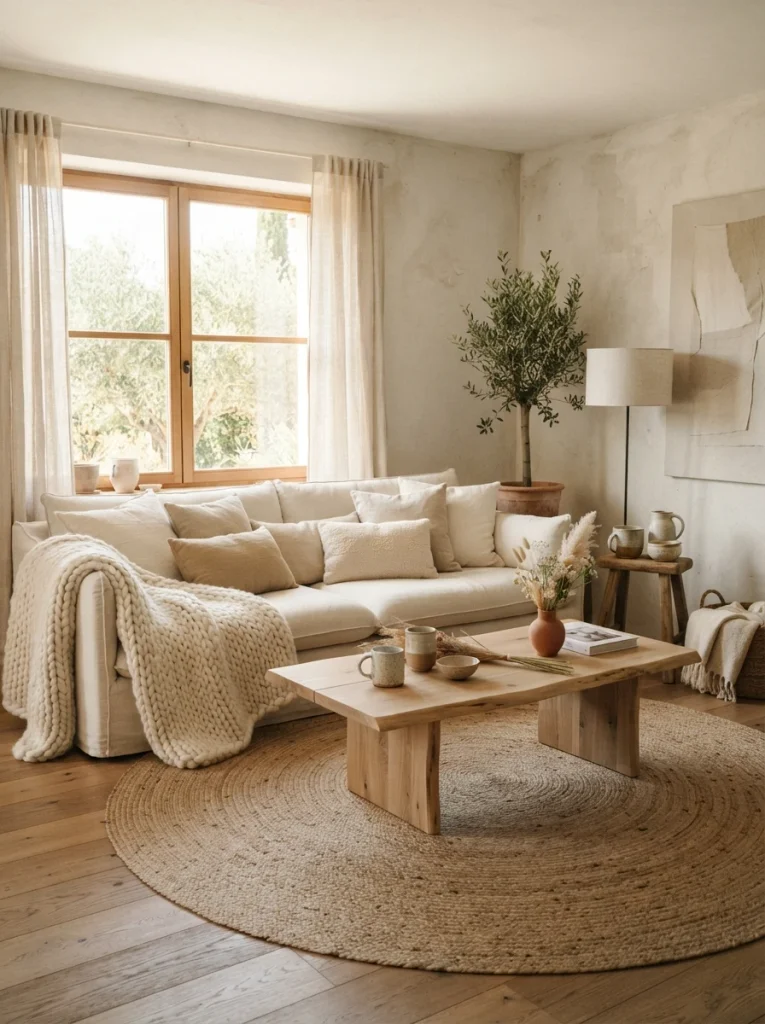
- Layered fabrics add warmth without making the room feel cluttered.
- Linen, cotton, wool, and jute create natural visual depth.
- A restrained beige palette keeps the space calm and airy.
- Low-profile furniture supports the minimalist foundation.
- One or two handmade accents add a bohemian personality.
The right textures can make a minimalist room feel warm without sacrificing its clean, uncluttered character. Start with a neutral linen sofa, then layer a wool throw, cotton cushions, and a woven jute rug beneath it. Each material should feel slightly different so the room gains depth without relying on lots of decoration. In my experience, natural fabrics work especially well here because they soften simple furniture and prevent a neutral palette from looking flat. Keep the shapes uncomplicated, then let texture provide the visual interest. The result feels relaxed, tactile, and thoughtfully collected rather than overly styled.
Balance is important when combining several natural materials in one space. Choose two or three closely related neutral shades, such as ivory, oatmeal, and warm beige, then vary their textures instead of introducing too many colors. A pale oak coffee table can add another organic layer while maintaining the room’s simple foundation. Keep decorative objects sparse and leave visible breathing room around the furniture. If the sofa already has several cushions, skip unnecessary accessories nearby. This approach creates a comfortable atmosphere that feels naturally bohemian while preserving the simplicity and visual calm that makes minimalist interiors so appealing.
Low Profile Seating
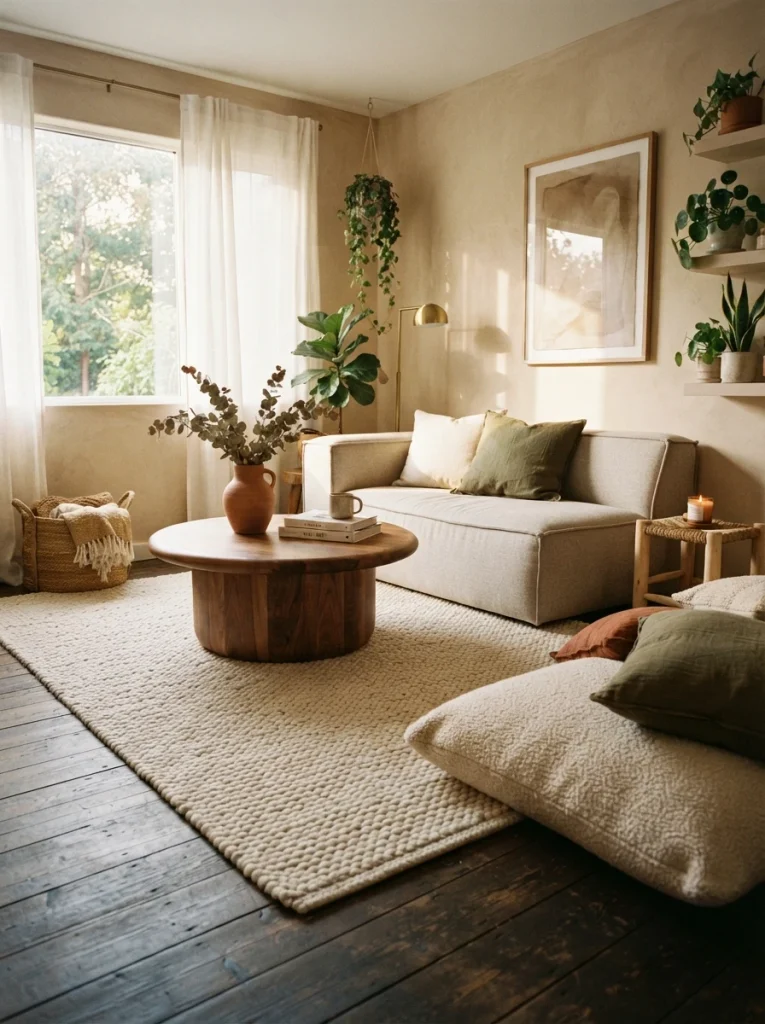
- Low furniture creates a relaxed, grounded atmosphere.
- Simple silhouettes keep the room visually uncluttered.
- Floor cushions provide flexible extra seating.
- Natural wood legs add warmth without visual heaviness.
- Open space around furniture makes the room feel larger.
A low seating arrangement instantly gives a living room a relaxed, grounded character while keeping the overall design visually light. Choose a low-profile cream or taupe sofa with clean lines, then add one floor cushion or compact pouf for flexible seating. Keep the furniture close to the floor without making it difficult to stand or move around comfortably. I’ve noticed that lower furniture works particularly well in rooms with generous windows because it preserves sightlines and allows natural light to travel across the space. The result feels casual, peaceful, and distinctly bohemian without becoming visually crowded.
Arrange the seating around one simple focal point, such as a round wood coffee table, textured rug, or small collection of ceramics. Avoid placing too many pieces around the perimeter because open floor area is part of the minimalist look. A floor cushion in muted rust, olive, or clay can introduce a gentle color accent while remaining connected to natural tones. Choose lightweight pieces that can be moved when needed, especially if the room serves multiple purposes. With thoughtful spacing, low furniture can make the living area feel more intimate while maintaining the airy quality of minimalist design.
Organic Wood Accents
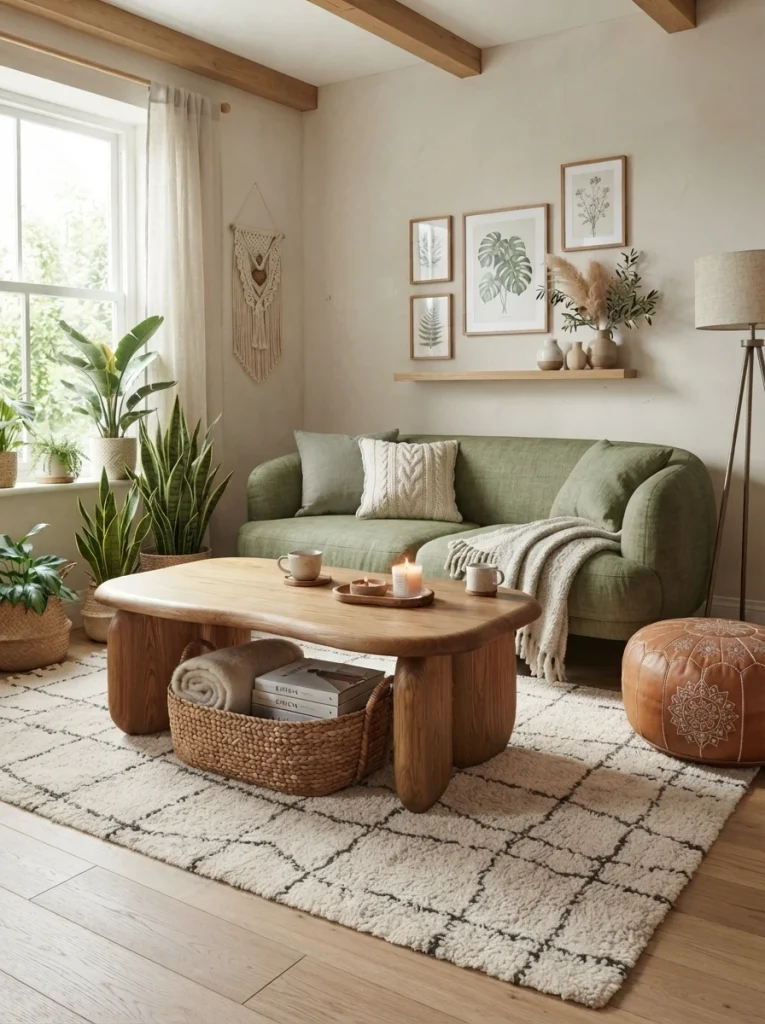
- Natural wood introduces warmth into a restrained palette.
- Irregular grain adds character without requiring extra decoration.
- Small wooden pieces prevent the room from feeling too polished.
- Mixed wood tones can create a collected appearance.
- Matte finishes work better than overly glossy surfaces here.
Natural wood can bring warmth and personality to a minimalist living room without adding visual clutter. Choose a simple oak coffee table, sculptural wooden stool, or slim console with visible grain and a matte finish. Look for pieces with organic shapes rather than highly ornate details so the bohemian influence remains subtle. In my experience, wood is especially useful in neutral rooms because it adds color variation naturally while keeping the palette grounded. Pair honey oak with cream textiles, woven accessories, and soft clay accents to create a welcoming atmosphere that feels collected rather than overly coordinated.
Use wood selectively so each piece has room to stand out. A single substantial coffee table can often make a stronger impression than several small wooden accessories scattered around the room. If you mix finishes, stay within a warm family of tones so the furniture feels connected. Leave some surfaces intentionally empty to preserve the minimalist quality. Add one handmade ceramic bowl or small plant for contrast against the wood grain. The combination of natural materials, simple forms, and open space creates a calm living area that feels relaxed and authentic while still offering plenty of visual interest.
Woven Statement Rug
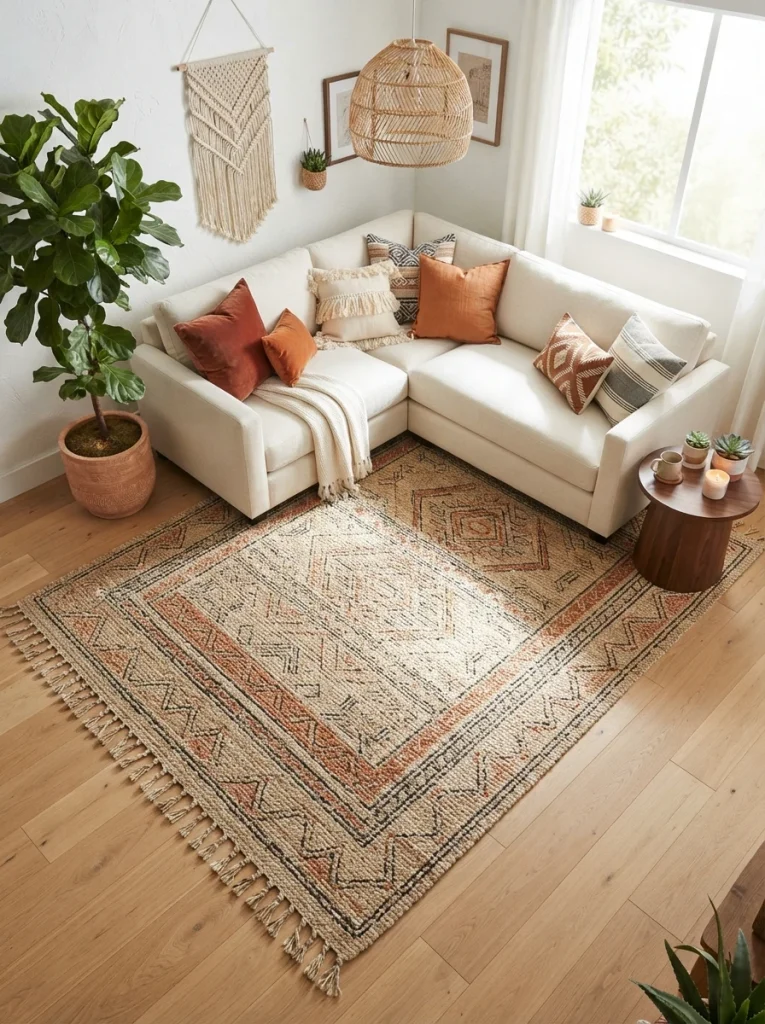
- A woven rug adds warmth without overwhelming the room.
- Natural fibers reinforce the relaxed bohemian character.
- A subtle pattern gives the neutral palette more depth.
- Large sizing helps visually connect separate seating pieces.
- Flat-weave styles are practical for everyday living.
A well-chosen woven rug can instantly make a simple living room feel warmer and more complete. Look for jute, sisal, wool, or a cotton flat weave with a restrained pattern that adds texture without becoming the main attraction. Place it beneath the sofa and coffee table so the seating area feels visually connected. I’ve noticed that natural-fiber rugs work especially well in minimalist rooms because they introduce organic variation while keeping the overall palette quiet. Choose oatmeal, sand, cream, or muted terracotta tones to create depth without making the space feel overly decorated.
Scale matters just as much as texture when choosing the right rug. A rug that is too small can make carefully arranged furniture appear disconnected, while a larger design helps define the entire seating zone. Leave enough visible flooring around the edges so the room still feels open. Flat-weave styles are particularly useful in busy homes because they are easier to clean and do not create unnecessary bulk beneath furniture. Pair the rug with simple linen upholstery, natural wood, and one or two woven accents. The finished space feels grounded, comfortable, and effortlessly relaxed.
Arched Floor Lamp
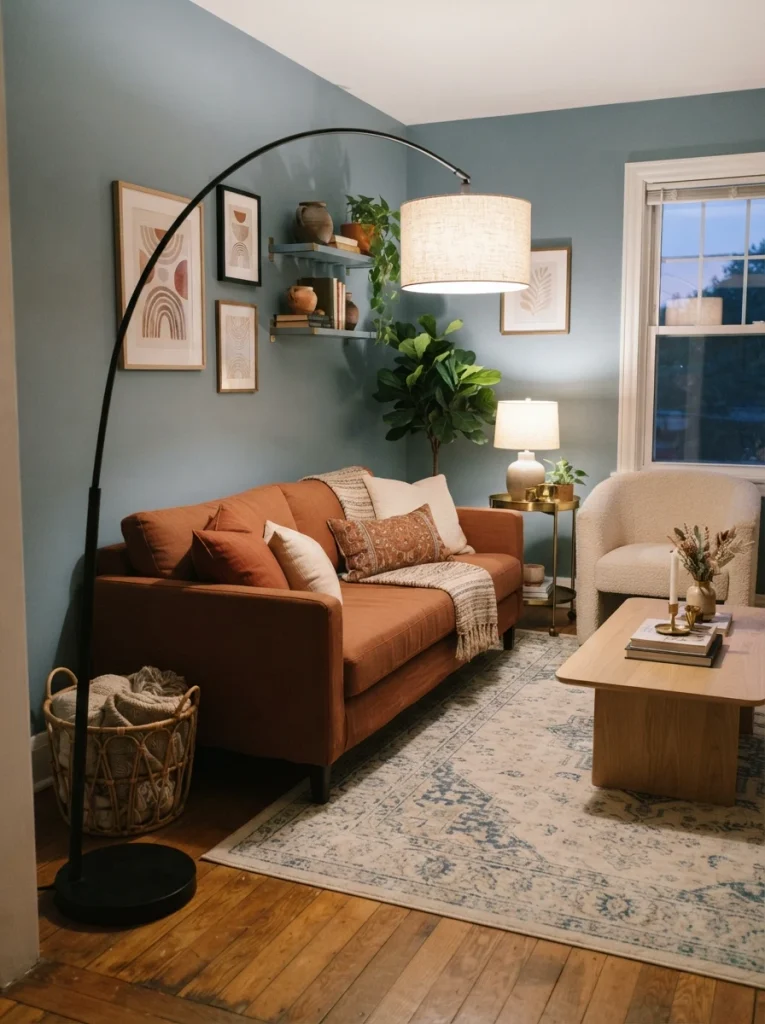
- An arched lamp adds sculptural interest without wall clutter.
- Its curved shape softens straight furniture lines.
- Focused lighting creates a cozy evening reading spot.
- A black or aged-brass finish adds subtle contrast.
- The slim base preserves valuable floor space.
An arched floor lamp can become a beautiful functional accent when you want more personality without adding another bulky piece of furniture. Choose a slim curved design that extends over a sofa or reading chair, creating focused illumination exactly where it is needed. Black metal can provide crisp contrast, while aged brass introduces a softer vintage note. In my experience, sculptural lighting is especially effective in minimalist rooms because it serves as both decoration and practical illumination. Keep the surrounding surfaces simple so the lamp’s curved silhouette remains easy to notice without making the room feel busy.
Place the lamp near a seating corner where its light will be useful after sunset. A warm bulb can create a soft pool of light that complements natural textiles and wood finishes, making the room feel more intimate in the evening. Avoid pairing it with too many statement fixtures, especially if the living room is compact. A low coffee table, woven rug, and one ceramic accent are usually enough to complete the arrangement. The combination of clean furniture and organic curves creates a relaxed atmosphere that feels modern, warm, and subtly bohemian without relying on excessive decoration.
Clay Accent Pieces
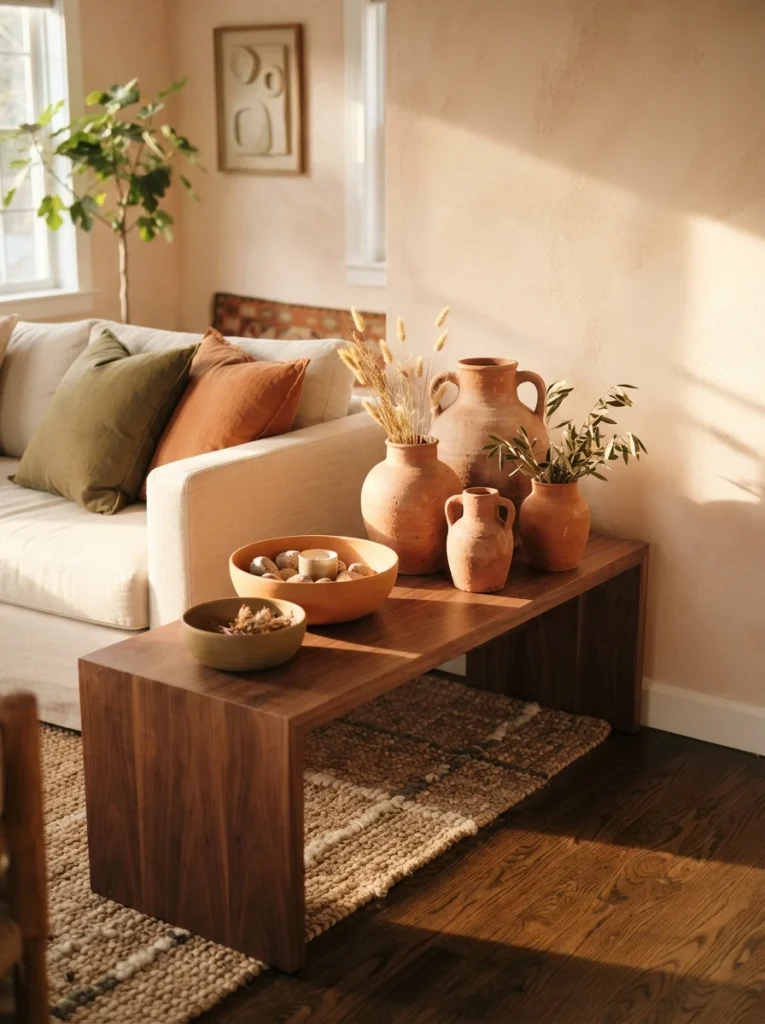
- Handmade ceramics introduce earthy color and natural texture.
- Small pieces add personality without filling every surface.
- Terracotta tones warm up pale neutral interiors.
- Irregular shapes create an authentic handcrafted feeling.
- Grouping a few pieces looks more intentional than scattering many.
A few handmade clay pieces can bring warmth and personality to a minimalist living room without compromising its clean appearance. Choose terracotta vases, sculptural bowls, or small ceramic vessels with imperfect shapes and matte surfaces. Warm clay tones work beautifully against ivory walls, pale upholstery, and natural wood. I’ve noticed that handmade ceramics feel especially effective in restrained interiors because their subtle imperfections add character that mass-produced accessories often lack. Rather than filling shelves with decorations, select two or three meaningful pieces and give each enough surrounding space to remain visually noticeable.
Think of clay accents as small moments of earthy color rather than a collection that needs to cover the room. Place a sculptural vase on a console, a shallow bowl on the coffee table, or one small vessel beside a stack of books. Keep the shapes varied but the color family connected so the arrangement feels cohesive. Soft natural light can reveal the texture of unglazed ceramic beautifully, while warm evening lighting gives terracotta a richer appearance. This simple approach adds a handcrafted bohemian touch while preserving the calm, uncluttered quality of the overall living room.
Cream Bouclé Sofa
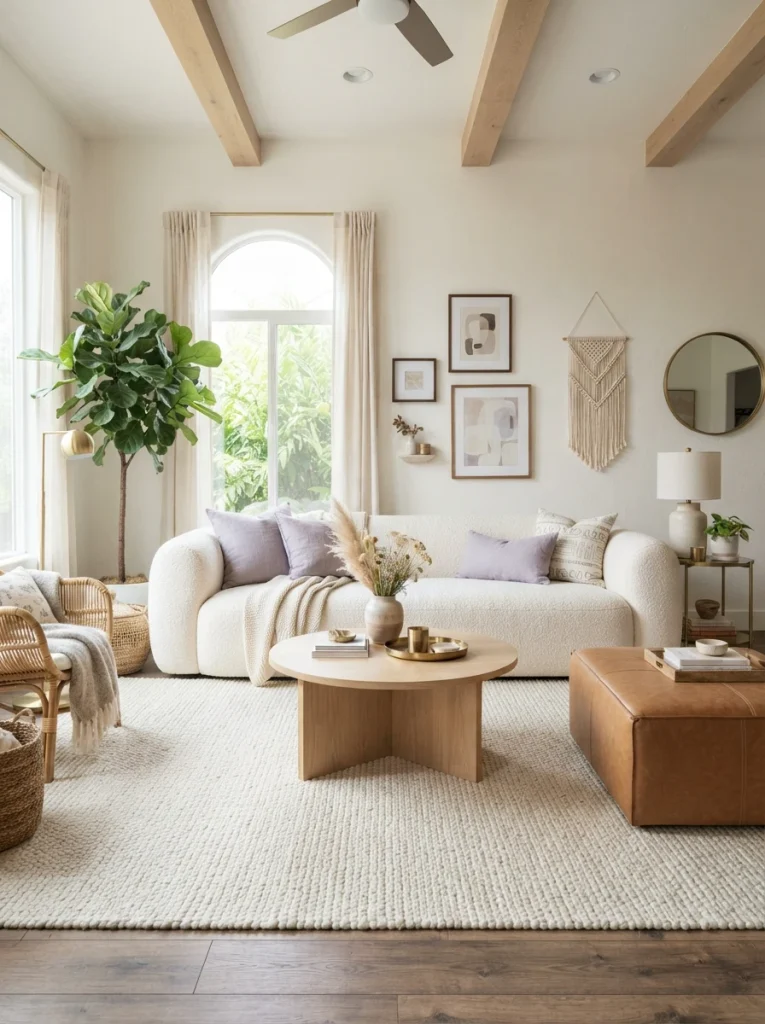
- Bouclé adds softness and tactile interest to a simple room.
- Cream upholstery keeps the seating visually light.
- Rounded edges complement relaxed bohemian styling.
- Natural wood furniture balances the pale sofa.
- A washable throw can make the seating more practical.
A cream bouclé sofa can become the soft, inviting anchor of a minimalist living room without making the space feel overly formal. Choose a simple silhouette with gently rounded edges, then surround it with natural wood, woven fibers, and muted earthy accents. The textured upholstery adds visual depth even when the color palette stays restrained. In my experience, tactile fabrics are especially useful in minimalist rooms because they create interest without requiring lots of decorative objects. Pair the sofa with a low wood table and a neutral rug for a relaxed, comfortable foundation.
Keep the surrounding furniture light and uncomplicated so the sofa remains the main seating feature. A single clay cushion, woven throw, or muted olive pillow can introduce subtle color without disrupting the calm palette. Avoid placing too many accessories on nearby surfaces because the bouclé texture already provides visual richness. If the sofa receives heavy everyday use, consider a removable or washable throw in a durable natural fabric. Soft daylight will emphasize the upholstery’s texture, while warm lamps can make the cream tone feel cozier at night. The result feels comfortable, refined, and naturally relaxed.
Earthy Color Palette
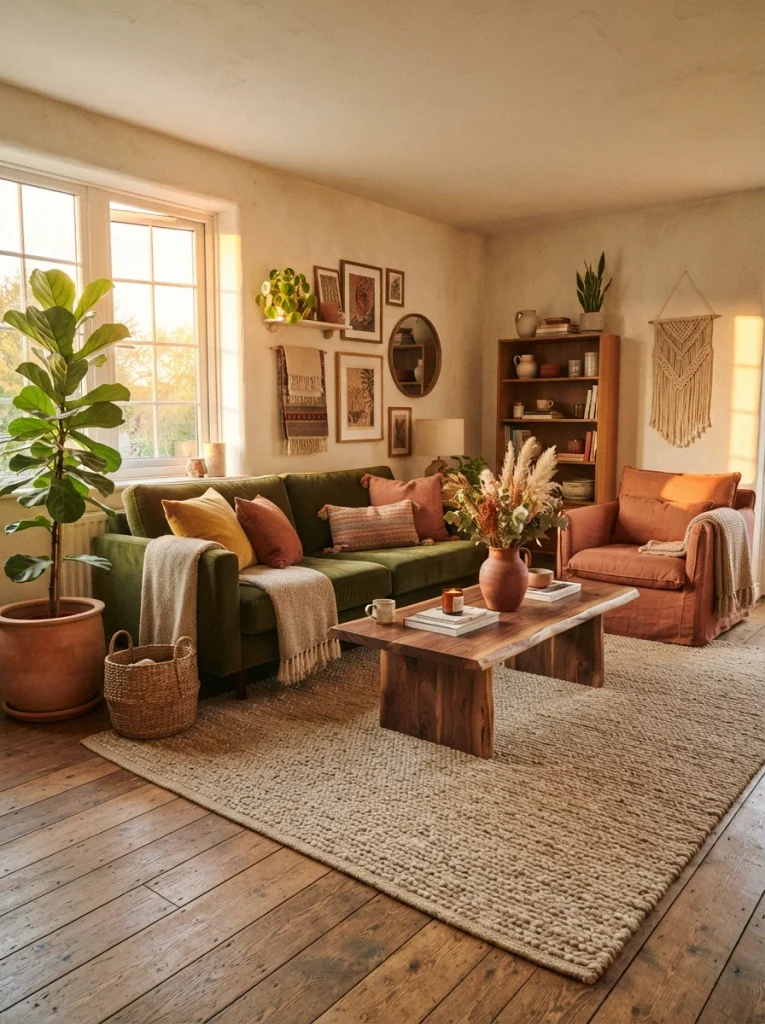
- Warm earth tones create a grounded bohemian atmosphere.
- Terracotta adds color without overwhelming neutral furniture.
- Olive green introduces a natural botanical feeling.
- Cream walls keep deeper shades from feeling heavy.
- Repeating two or three accents creates visual cohesion.
An earthy palette can give a minimalist living room warmth while keeping the overall design calm and approachable. Start with a foundation of cream, oatmeal, or warm white, then introduce small amounts of terracotta, olive, clay, and sandy brown. These shades work naturally with wood, linen, leather, and woven materials. I’ve noticed that earthy colors are particularly effective when used as accents rather than covering every surface. A terracotta cushion, olive chair, or clay vase can provide enough contrast to make the room interesting while allowing the neutral foundation to remain visually dominant.
Keep the color distribution balanced by repeating each accent in small, intentional places. For example, an olive cushion can connect with a leafy plant, while a terracotta vase can echo a warm patterned rug. This creates cohesion without requiring matching furniture. Avoid using too many saturated colors because they can weaken the minimalist quality. Instead, choose dusty, sun-baked versions that feel naturally muted. Add plenty of open space around the colored pieces so each shade has room to breathe. The finished room feels earthy, expressive, and relaxed while still maintaining a clean visual structure.
Minimalist Gallery Wall
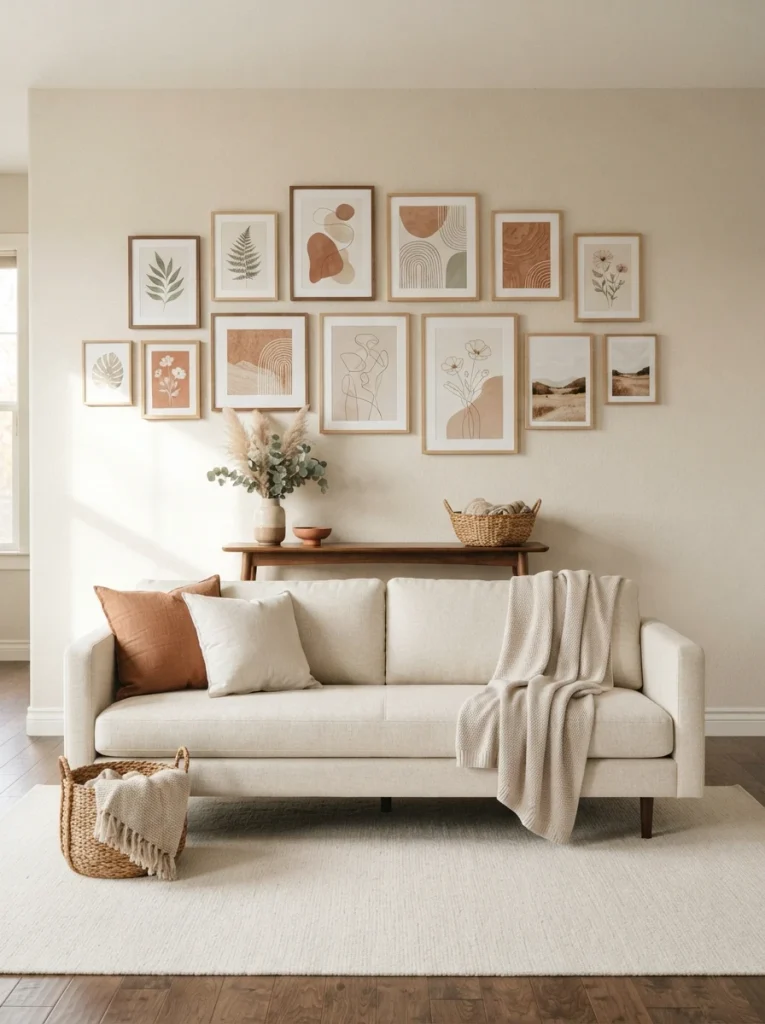
- A small art collection adds personality without filling the room.
- Neutral frames keep the display visually cohesive.
- Handmade prints reinforce the relaxed bohemian character.
- Uneven spacing can make the arrangement feel more organic.
- Leaving surrounding walls open preserves the minimalist balance.
A carefully edited gallery wall can bring personality to a minimalist living room without turning the space into a crowded display. Choose three to five artworks featuring abstract shapes, botanical forms, woven textures, or earthy photography. Keep the frames simple in wood, black, or natural linen so they complement the room rather than competing with the furniture. In my experience, fewer larger pieces often look more sophisticated than a wall packed with tiny frames. Choose artwork that shares a loose color family, then allow differences in texture and subject to create an authentic collected feeling.
Placement is just as important as the artwork itself. Arrange the pieces around the visual center of the sofa or console, leaving enough space between them to keep each image readable. Slightly varied frame sizes can create a relaxed bohemian rhythm, while consistent outer alignment keeps the display polished. Avoid decorating every surrounding wall because negative space is an important part of minimalist design. Soft directional lighting can highlight the artwork after dark without illuminating the entire room. The finished gallery feels personal and expressive while preserving the calm, uncluttered atmosphere of the living space.
Woven Pendant Lighting
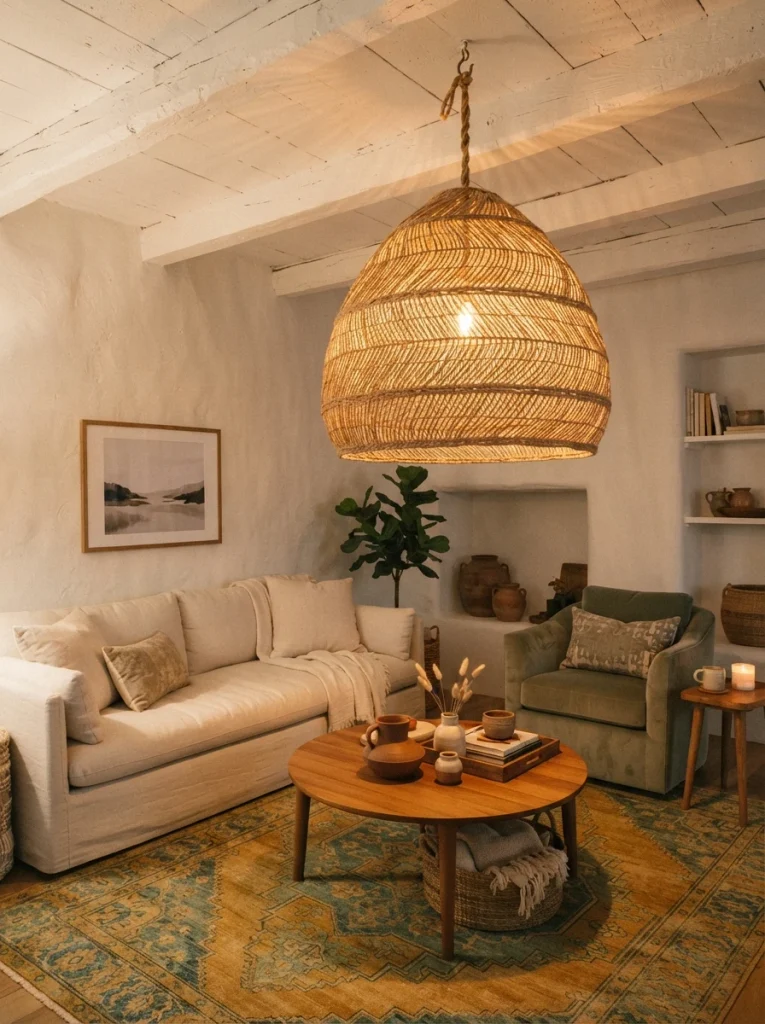
- A woven pendant adds texture without filling valuable floor space.
- Natural fibers reinforce the relaxed bohemian aesthetic.
- Warm illumination makes the seating area feel more inviting.
- Oversized shapes can create a strong focal point.
- A dimmer allows the atmosphere to change throughout the day.
A woven pendant can make a minimalist living room feel warmer while adding visual interest from above. Choose rattan, bamboo, seagrass, or another natural fiber in a simple rounded or sculptural shape. Hang it above the main seating area so it becomes a clear focal point without occupying floor or table space. In my experience, woven lighting works especially well with neutral furniture because its texture creates depth without introducing another strong color. Pair the fixture with cream upholstery, natural wood, and one earthy accent for a relaxed bohemian atmosphere that still feels polished.
Consider the pendant’s scale carefully before installation, especially if the living room has a low ceiling. A medium-sized fixture can define a compact seating area without making the room feel crowded, while a larger woven shade works beautifully in rooms with higher ceilings. Use a warm bulb to bring out the natural fiber’s texture during the evening. Keep other lighting simple, perhaps with one floor lamp or small table lamp, so the pendant remains visually important. The combination of soft light, organic texture, and uncluttered furniture creates a welcoming atmosphere that feels both relaxed and thoughtfully designed.
Indoor Plant Cluster
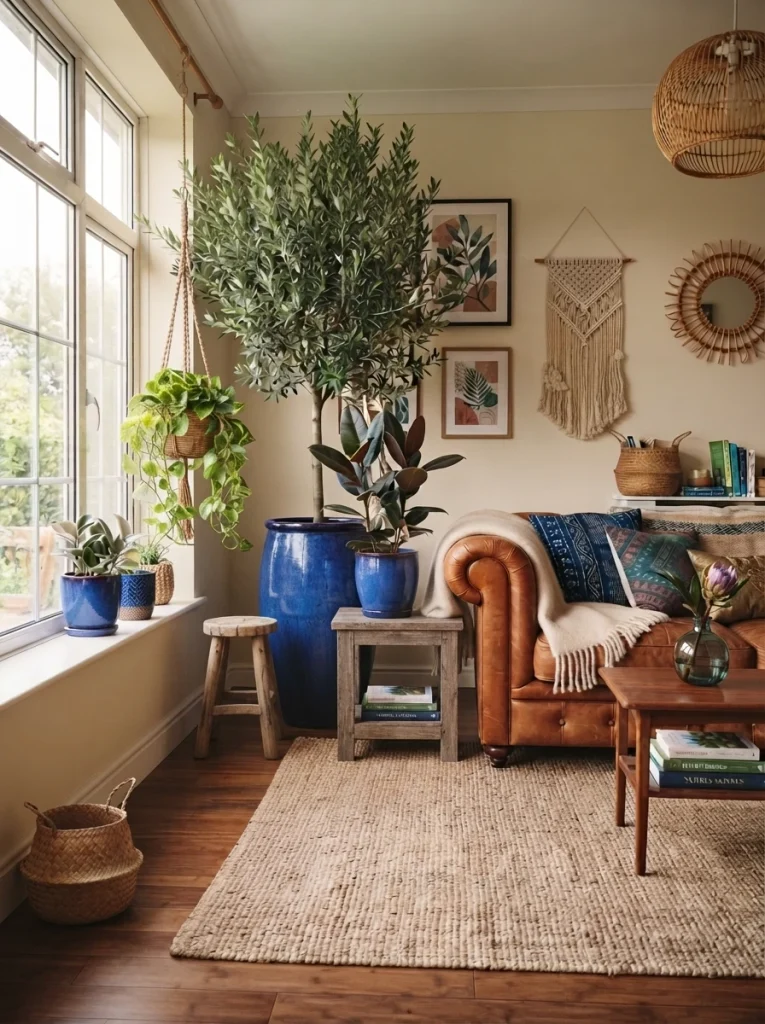
- Plants bring natural color into a restrained interior.
- Grouping different heights creates visual rhythm.
- Woven planters strengthen the organic material palette.
- Larger leaves can soften hard furniture lines.
- Keep the collection edited so the room remains uncluttered.
A carefully edited plant cluster can bring life and gentle color into a minimalist bohemian living room without making it feel like a jungle. Combine two or three plants at different heights using simple ceramic and woven planters. A tall olive tree or fiddle-leaf plant can anchor an empty corner, while smaller trailing greenery adds softness near a shelf or side table. I’ve noticed that plants are particularly effective in neutral interiors because their natural green tones provide contrast without feeling visually aggressive. Choose varieties that suit your available light so the arrangement remains healthy and easy to maintain.
Resist the temptation to fill every empty corner with greenery. The minimalist approach works best when each plant has enough surrounding space to remain visually distinct. Use a large woven basket for the tallest plant and smaller clay pots for lower pieces to introduce material variation. Position the cluster near a window where natural light can highlight the leaves throughout the day. Keep nearby furniture simple and avoid competing patterns. A small group of healthy plants can transform a quiet corner into a fresh focal point while maintaining the relaxed, organic feeling that defines bohemian interiors.
Soft Archway Sofa
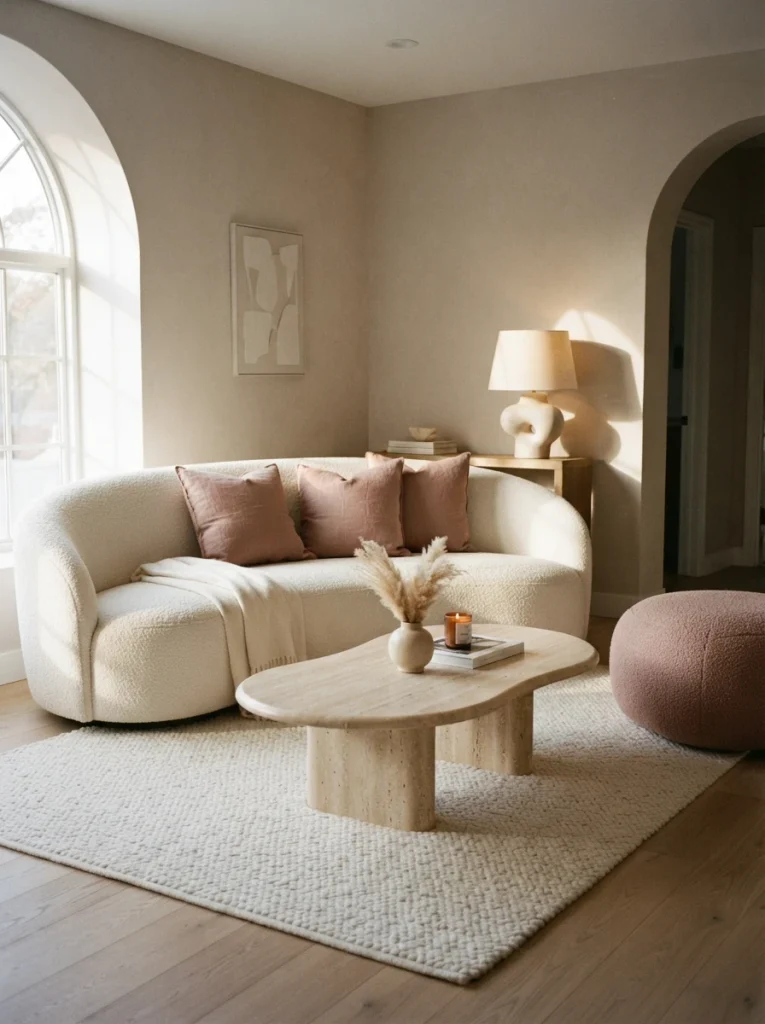
- Curved furniture creates a softer visual flow.
- Rounded upholstery complements organic bohemian shapes.
- A neutral sofa keeps the room visually calm.
- Sculptural forms add interest without excessive decoration.
- Open space around the sofa emphasizes its silhouette.
A gently curved sofa can give a minimalist living room a softer, more inviting character while creating a subtle focal point. Choose an ivory, warm beige, or muted mushroom design with rounded arms and a clean silhouette. Pair it with an oval coffee table and a softly patterned rug to repeat the organic shapes throughout the room. In my experience, curved furniture can make a simple space feel more thoughtfully designed because the silhouette itself provides visual interest. Keep surrounding pieces low and uncomplicated so the sofa remains the main feature without making the room feel crowded.
Position the curved sofa where its shape can be appreciated from multiple angles rather than pushing it tightly against every wall. Leave enough open space around the arms and front edge to emphasize the rounded profile. Add one textured throw and a pair of earthy cushions for comfort, but avoid excessive layering. Natural daylight can highlight the upholstery’s soft curves, while a sculptural floor lamp provides gentle evening illumination. A pale wood table and woven rug can complete the arrangement. The finished seating area feels relaxed, modern, and subtly artistic while maintaining a strong minimalist foundation.
Rattan Accent Chair
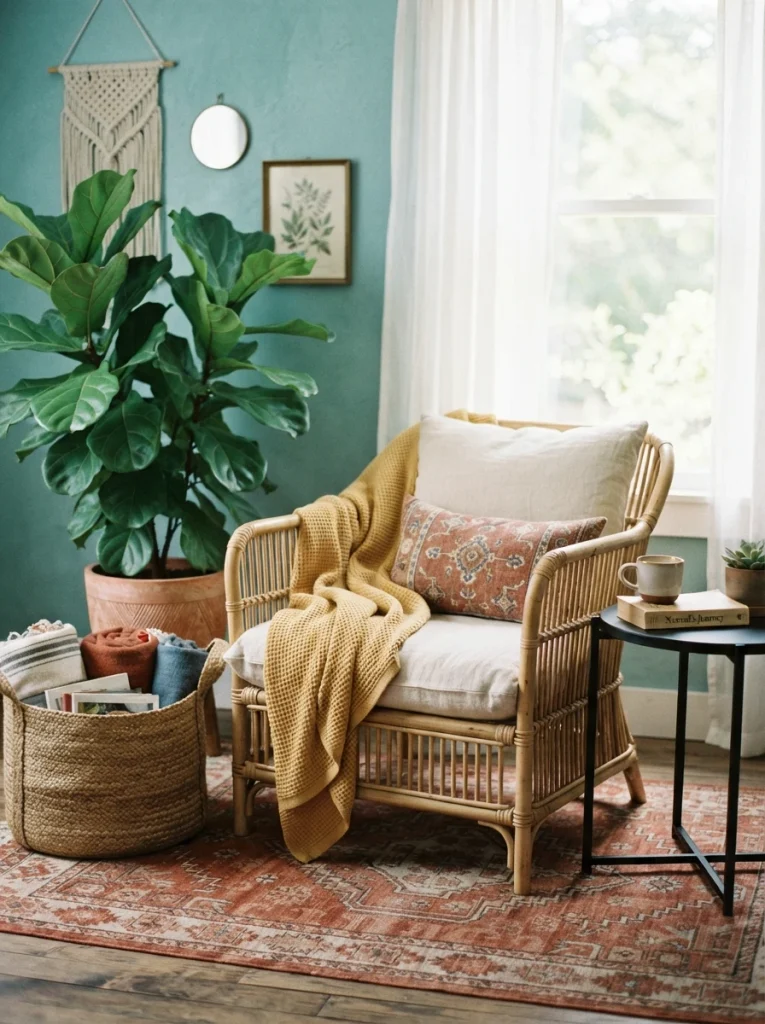
- A rattan chair introduces natural texture without visual heaviness.
- Open-weave construction keeps the seating area feeling airy.
- Cream cushions add comfort while preserving the neutral palette.
- A warm wood side table complements the woven texture.
- One statement chair can define an otherwise unused corner.
A rattan accent chair can add instant bohemian character while keeping a minimalist living room visually light. Choose an open-weave frame with a simple silhouette and pair it with a cream linen cushion for comfort. Place it beside a small wood side table or near a window where the texture can catch natural light. I’ve noticed that rattan works particularly well when used as one strong accent rather than repeated throughout the room. Its natural color adds warmth and personality while the open construction prevents the corner from feeling heavy or crowded.
Use the chair to create a secondary seating zone rather than simply filling an empty corner. A small woven rug underneath can define the area, while one clay vase or leafy plant nearby adds a subtle organic touch. Keep the surrounding walls and larger furniture relatively quiet so the rattan texture remains noticeable. For evening use, position a slim floor lamp behind or beside the chair to create focused reading light. The combination of woven material, natural wood, soft upholstery, and open floor space creates a relaxed retreat that feels authentic without becoming overly decorated.
Neutral Layered Curtains
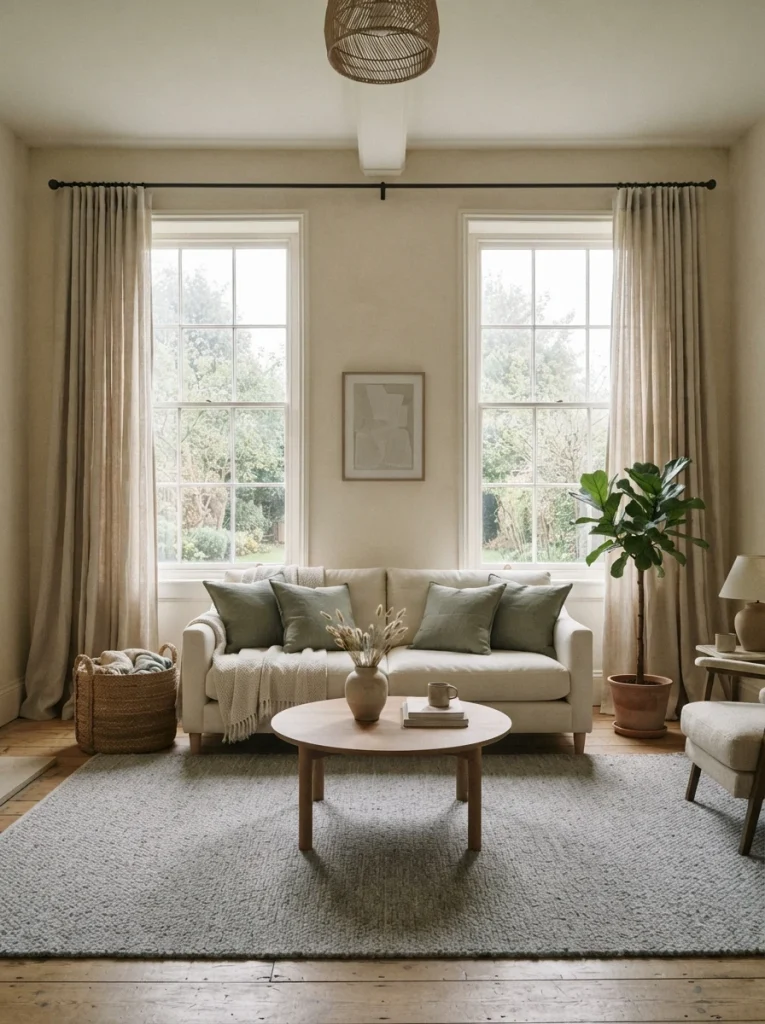
- Linen curtains soften strong architectural lines.
- Floor-length panels can make ceilings appear taller.
- Cream and oatmeal tones preserve the airy palette.
- Natural fabric adds texture without visual clutter.
- Light-filtering panels create a softer atmosphere during the day.
Soft linen curtains can completely change the atmosphere of a minimalist living room by adding movement, texture, and warmth around the windows. Choose floor-length panels in cream, oatmeal, or warm ivory and hang them slightly wider than the window frame. This makes the opening feel larger while allowing natural light to filter gently into the room. In my experience, lightweight curtains are one of the easiest ways to soften a room dominated by clean lines and hard surfaces. They create a relaxed bohemian feeling without requiring additional furniture or decorative objects.
Keep the curtain treatment simple so it supports rather than competes with the rest of the space. Natural linen with subtle texture is usually enough; heavy patterns can make a minimalist room feel busier than necessary. Let the fabric fall close to the floor for a relaxed, elegant appearance, and choose a simple wood or matte-metal rod. During the day, filtered sunlight can create a soft glow across the room, while heavier side panels can provide privacy in the evening. Combined with woven furniture and neutral textiles, the curtains help create a calm, comfortable, naturally layered interior.
Handcrafted Coffee Table
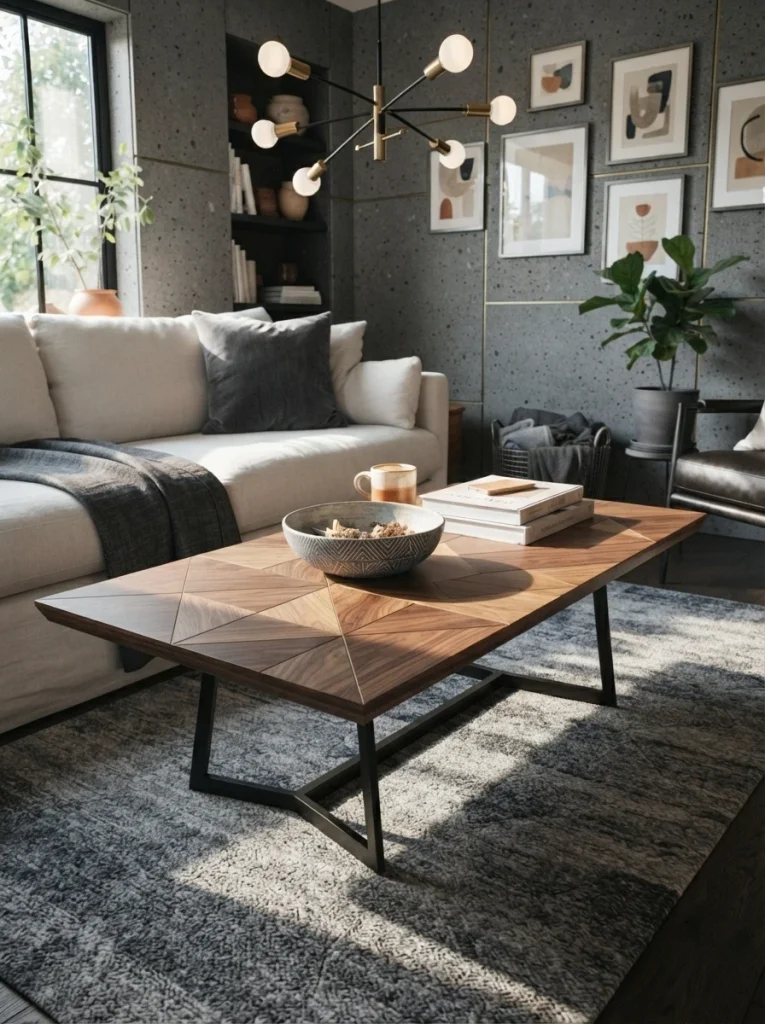
- Handmade furniture adds character without requiring extra decoration.
- Organic edges reinforce the natural bohemian influence.
- Solid wood creates warmth against neutral upholstery.
- A low profile keeps the room feeling open.
- One sculptural table can become a quiet focal point.
A handcrafted coffee table can give a minimalist living room a distinctive centerpiece without relying on excessive decoration. Choose a solid wood design with visible grain, softly irregular edges, or a sculptural base that shows the maker’s craftsmanship. Pair it with a neutral sofa and woven rug so the table’s natural character remains visible. I’ve noticed that handmade furniture feels especially effective in minimalist spaces because small imperfections make the room feel personal rather than overly polished. A warm walnut, teak, or oak finish can also introduce subtle color while maintaining an earthy, relaxed atmosphere.
Keep the tabletop intentionally edited so the craftsmanship remains the focus. One shallow ceramic bowl, a small stack of books, or a handmade candle holder is enough to complete the surface. Avoid surrounding the table with numerous side pieces because the open floor area is part of the design. Choose a table height that works comfortably with the sofa and leaves clear walking space around it. Soft directional lighting can emphasize the wood grain after sunset, while daylight highlights its natural variation. The finished room feels grounded, artisanal, and welcoming without losing its minimalist structure.
Macramé Wall Detail
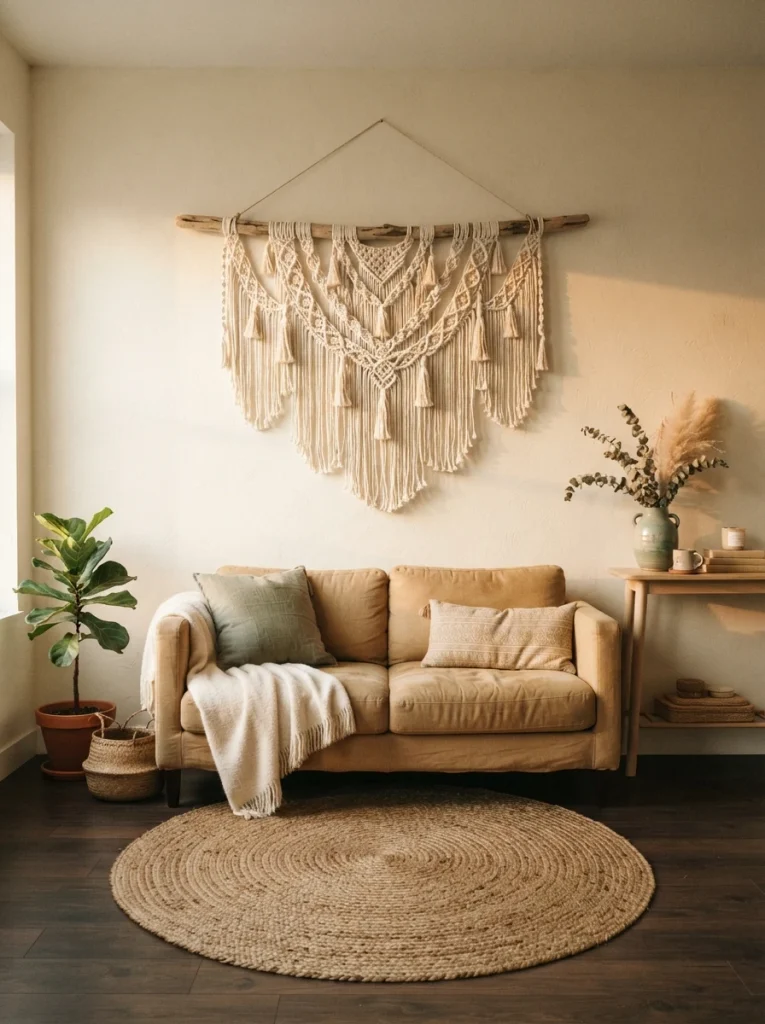
- Macramé adds handcrafted texture without overwhelming the room.
- A single wall hanging creates a gentle focal point.
- Cream or natural fibers blend easily with neutral walls.
- Organic patterns reinforce the relaxed bohemian character.
- Keeping the surrounding wall clear preserves the minimalist balance.
A macramé wall hanging can introduce handcrafted personality while keeping a minimalist living room visually calm. Choose one substantial piece in natural cotton, ivory, or soft sand and position it above a sofa, console, or reading chair. The woven knots provide texture and movement without requiring bold artwork or multiple accessories. In my experience, one carefully chosen textile often works better than several small decorations because it creates a clear focal point while leaving plenty of breathing room around it. Pair the hanging with natural wood, linen upholstery, and earthy ceramics for a cohesive bohemian foundation.
Scale the wall hanging according to the furniture beneath it so the arrangement feels balanced rather than accidental. A wider sofa benefits from a larger horizontal textile, while a narrow chair can work with a taller, more vertical piece. Keep nearby walls mostly empty to preserve the minimalist quality. Warm side lighting can reveal the woven texture beautifully in the evening, while daylight creates softer shadows across the fibers. Avoid combining several heavily textured wall pieces in one small room. One handmade textile, supported by simple furniture and natural materials, can provide enough character to make the entire space feel finished.
Earthy Ceramic Decor
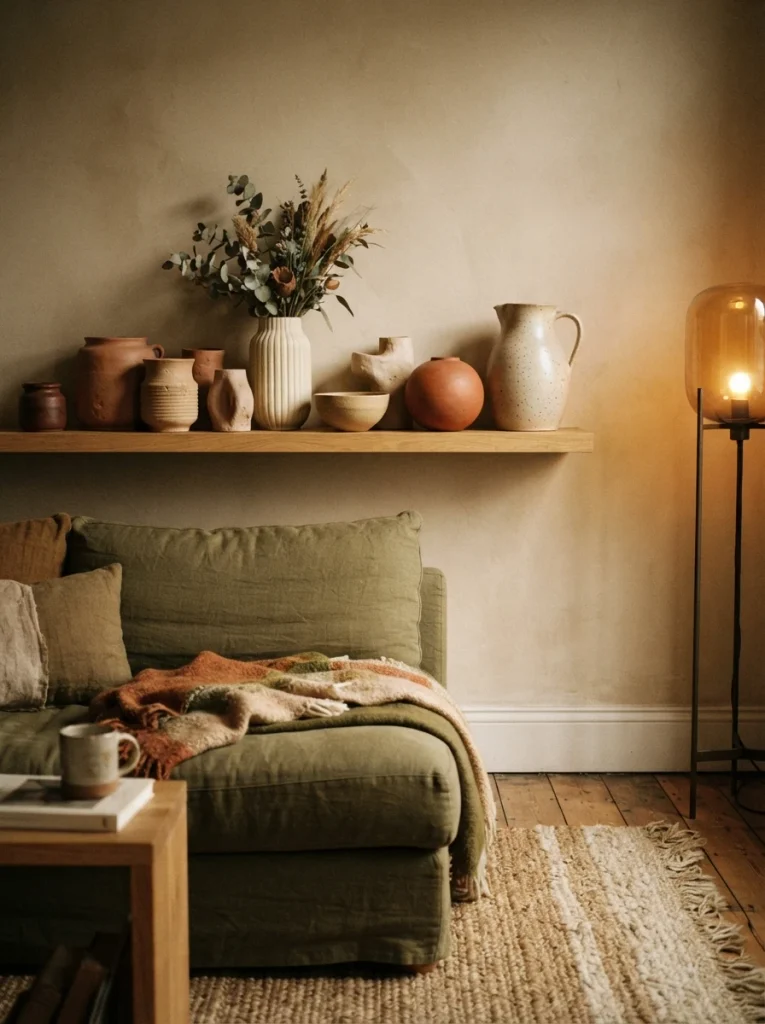
- Handmade ceramics add warmth through subtle color and texture.
- Matte finishes feel more natural than glossy surfaces.
- Irregular forms create a relaxed handcrafted appearance.
- Small groupings keep shelves visually interesting without clutter.
- Terracotta and sand tones work beautifully with neutral furniture.
Earthy ceramics can add just enough personality to a minimalist living room while keeping the overall styling restrained. Look for handmade vases, shallow bowls, candle holders, and sculptural vessels in terracotta, sandstone, cream, or muted brown. Their irregular shapes and matte finishes create the relaxed character associated with bohemian interiors without requiring bright colors or elaborate decoration. I’ve noticed that ceramics are particularly useful on otherwise empty shelves and consoles because they provide texture while remaining compact. Choose a small collection with related earthy tones, then leave generous space between pieces.
Arrange ceramics at different heights to create a natural visual rhythm without making the display feel crowded. A taller vase can anchor one end of a console, while a low bowl or small sculpture balances the opposite side. Avoid lining up identical objects because slight differences make the arrangement feel more collected and authentic. Keep the background simple so the handmade surfaces remain noticeable. Natural daylight will emphasize subtle variations in clay and glaze, while warm evening lighting can deepen terracotta tones. The finished display feels personal, grounded, and artistic while maintaining the clean structure of minimalist decorating.
Open Air Layout
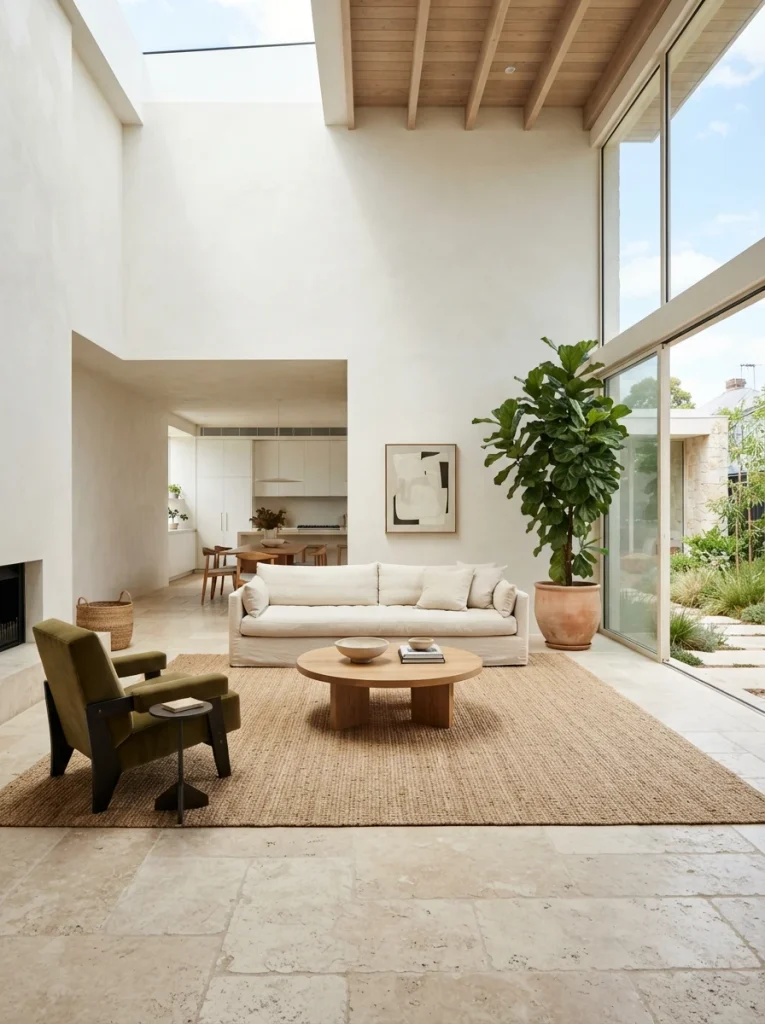
- Generous floor space makes the room feel calm and breathable.
- Floating furniture improves visual flow around the seating area.
- Minimal accessories keep attention on natural materials.
- Clear pathways make the room more functional.
- Low furniture supports an open, relaxed atmosphere.
An open layout can make a minimalist bohemian living room feel significantly larger and more peaceful, even when the actual square footage is limited. Start by positioning the sofa and main seating away from unnecessary obstacles, then create clear pathways around the furniture. A low coffee table, lightweight accent chair, and simple rug can define the seating zone without closing it in. In my experience, removing one unnecessary piece of furniture often improves a room more than adding several decorative items. The goal is to create a comfortable negative space where light, movement, and natural textures can be appreciated.
Keep the perimeter of the room relatively open and resist filling every corner simply because space is available. Use one plant, floor lamp, or woven basket to give an empty area purpose without overcrowding it. Choose furniture with visible legs or open bases so more flooring remains visible beneath each piece. Natural light should travel freely across the room, making pale walls and textiles feel brighter. At night, use a few warm light sources rather than one strong overhead fixture. This creates a flexible, breathable space that feels serene while retaining the relaxed personality of bohemian design.
Natural Fiber Poufs
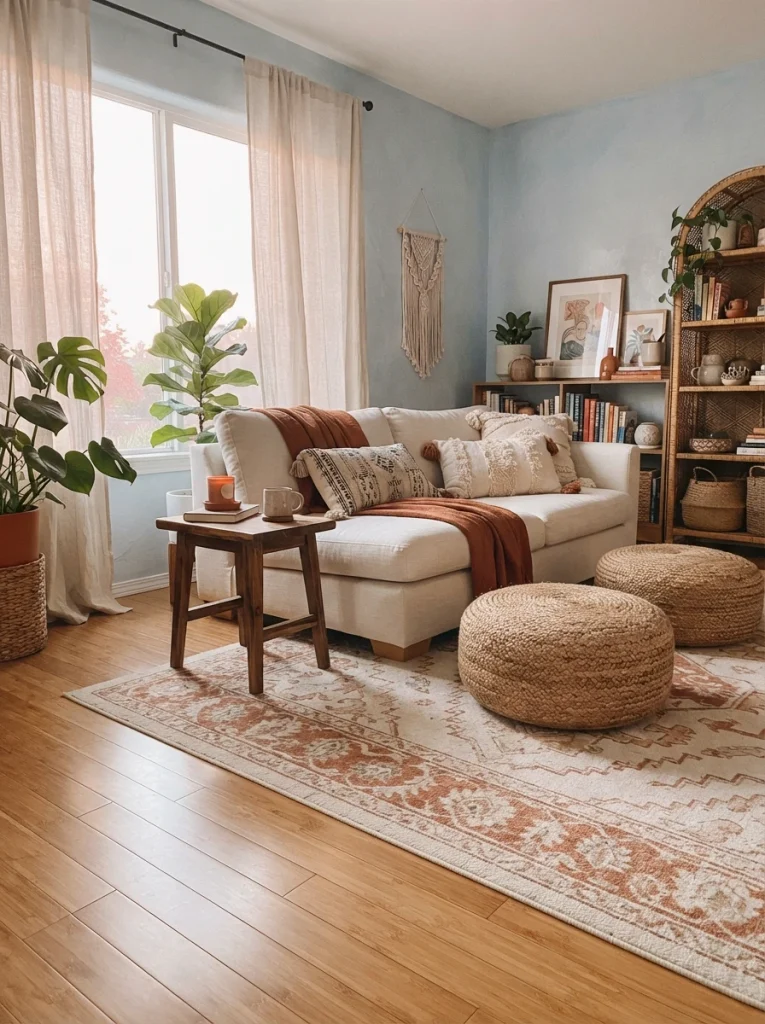
- Floor poufs add flexible seating without visual bulk.
- Jute and woven fibers reinforce the organic aesthetic.
- Small sizes work well in compact seating areas.
- Poufs can move easily when the room needs more floor space.
- Earthy shades add subtle warmth beside neutral furniture.
A natural-fiber pouf can add comfortable extra seating while keeping a minimalist living room flexible and uncluttered. Choose one or two compact poufs made from jute, woven cotton, or textured wool, then position them near the sofa or coffee table. Their low profile keeps sightlines open while their tactile surfaces introduce gentle visual interest. I’ve noticed that movable seating is especially practical in relaxed homes because poufs can shift easily when guests arrive or when you simply want more open floor space. Choose muted tan, rust, cream, or olive for an earthy bohemian accent.
Use poufs as functional pieces rather than filling the room with decorative floor accessories. Place one beside the coffee table for casual seating or use a pair to create balance across the rug. When they are not needed, tuck them beneath a console or beside the sofa to keep pathways clear. A simple woven basket nearby can provide additional texture while offering useful storage for throws. Keep larger furniture streamlined so the smaller pieces do not make the room feel crowded. This flexible arrangement creates a welcoming atmosphere that feels casual, organic, and easy to adapt throughout the day.
Sunwashed Wall Tones
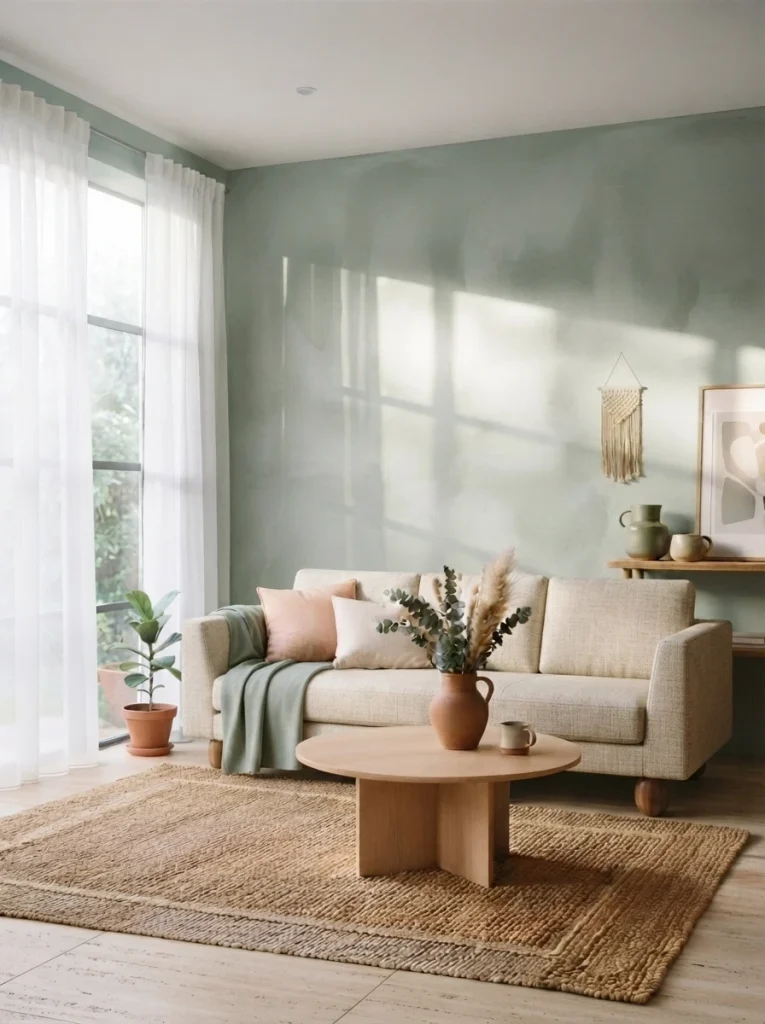
- Soft wall colors create a warm, naturally aged appearance.
- Muted peach or sandy shades add subtle personality.
- Light tones help reflect available daylight.
- Natural wood looks richer against warm plaster.
- Minimal artwork keeps the wall treatment visually prominent.
Sunwashed wall colors can give a minimalist living room the warm, relaxed character of a space shaped by natural light. Consider soft sand, muted peach, dusty beige, pale clay, or warm ivory instead of stark white. These shades create a gentle backdrop for linen furniture, wood accents, and woven accessories while adding more depth than a completely neutral wall. In my experience, warm plaster-like colors work particularly well in bohemian interiors because they make simple furnishings feel softer and more connected to natural materials. Keep the finish matte so the walls maintain an understated, organic appearance.
Let the wall color do most of the decorative work by keeping artwork and accessories relatively restrained. A pale oak console, woven mirror, or single handmade textile can complement the warm backdrop without competing with it. Natural daylight will shift the appearance of the color throughout the day, creating subtle changes in warmth and shadow. In the evening, use warm lamps rather than cool white bulbs so the walls retain their inviting character. Pairing sunwashed tones with cream upholstery, terracotta ceramics, and green plants creates a calm atmosphere that feels naturally layered rather than heavily decorated.
Minimalist Boho Balance
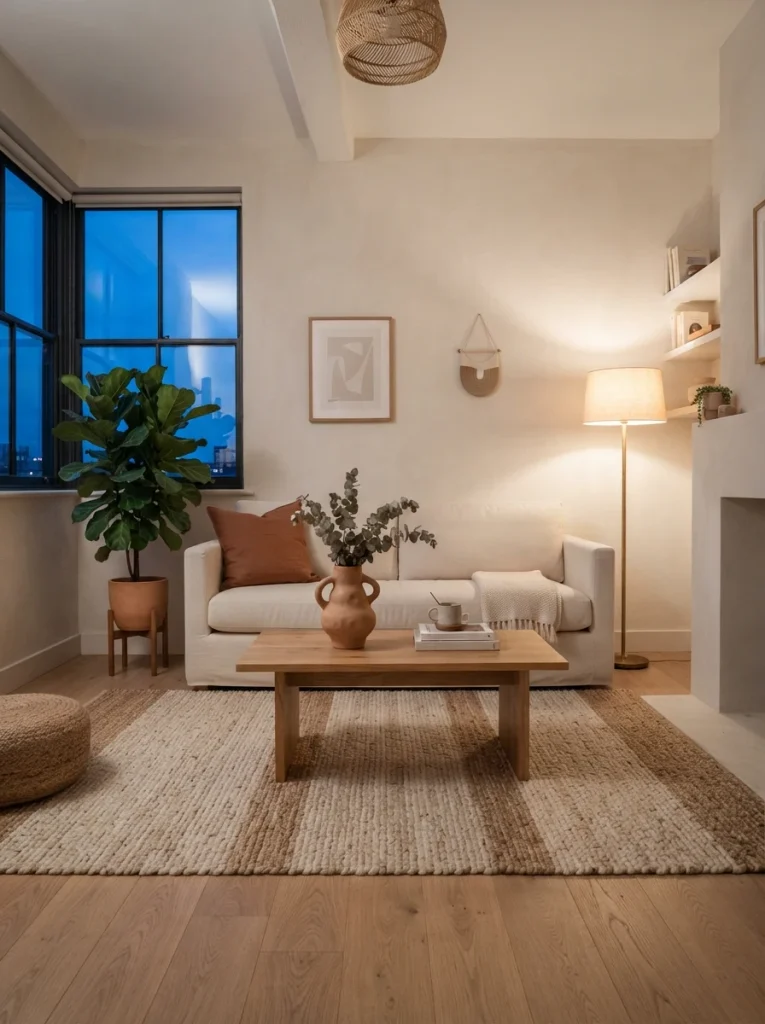
- Clean furniture prevents bohemian details from becoming overwhelming.
- A few handmade accents provide warmth and individuality.
- Natural materials create visual richness without excessive decoration.
- Open space keeps the room feeling peaceful.
- Repeating earthy tones creates a cohesive finish.
The most successful minimalist bohemian rooms find a sweet spot between simplicity and personality. Start with clean-lined furniture and an uncluttered layout, then introduce character through natural materials, handmade pieces, plants, and softly earthy colors. This approach gives you the warmth of bohemian decorating without turning the room into a collection of competing patterns and objects. I’ve noticed that the best results often come from choosing fewer pieces and making each one meaningful. A woven rug, sculptural ceramic, natural wood table, and comfortable linen sofa can provide plenty of character when they are thoughtfully arranged.
Think about every item in the room in terms of both beauty and usefulness. Keep surfaces partially empty, allow furniture to breathe, and choose accessories that contribute texture, color, or function. Repeat a few materials throughout the space so the different elements feel connected rather than random. For example, pair a jute rug with a woven basket and natural wood furniture, then add one muted terracotta accent for warmth. The finished room should feel collected rather than decorated all at once. With this balance, you can create a peaceful living space that feels personal, inviting, and effortlessly bohemian.
Create Your Dream Boho Living Room
A beautiful bohemian living room does not need layers of clutter or countless decorative pieces. The best minimalist bohemian living room ideas combine simplicity, natural materials, soft textures, earthy colors, and carefully chosen accents to create a space that feels personal and peaceful. Start with the pieces you already love, remove what no longer serves the room, and gradually add texture and character where needed. Save this post on Pinterest so you can revisit your favorite ideas when decorating, and share it with someone who loves relaxed interiors. I’ve seen how thoughtful changes can completely refresh a room, so choose one idea and start creating your own calm retrea
